
A washer that stops with a drum full of water can disrupt the entire day, especially when school clothes, work uniforms, or business linens are waiting. Professional washing machine repair helps identify the real fault quickly, protects the appliance from further damage, and gets your laundry routine moving again without unnecessary guesswork.
Some problems are obvious, such as water leaking across the floor or a machine that will not turn on. Others begin quietly: longer wash cycles, a new grinding noise, clothes coming out too wet, or a machine that shakes more than usual. Acting early can often prevent a smaller issue from becoming a complete breakdown.
When Washing Machine Repair Is Needed
A washing machine relies on several systems working together: the power supply, water inlet, drain pump, motor, belt or direct-drive components, door lock, control board, and internal sensors. When one part fails, the symptom may seem unrelated. For example, a washer that refuses to spin may have a drainage problem rather than a motor failure.
Call for service when the machine repeatedly stops mid-cycle, trips the electrical circuit, leaves standing water in the drum, produces burning smells, or leaks from underneath. These are not issues to ignore or repeatedly reset. Continuing to run the appliance can damage internal components, flooring, cabinets, or nearby electrical connections.
Unusual noise also deserves attention. A light hum during operation is normal, but loud banging, scraping, squealing, or grinding is not. The cause could range from an unbalanced load to worn bearings, a loose component, or an object caught where it should not be. A technician can inspect the machine safely and explain what is causing the sound.
The Washer Will Not Start
When a washing machine does not start, first check the simple external causes. Confirm that the plug is fully connected, the outlet has power, and the door or lid is closed firmly. Many machines will not begin a cycle unless the safety lock engages correctly.
If power is available but the display is blank, the buttons do not respond, or the machine starts and immediately stops, the issue may involve the door lock, wiring, control panel, or electronic board. Avoid opening electrical panels or bypassing a safety lock. These parts require proper testing and should be handled by a qualified repair professional.
The Machine Will Not Drain or Spin
A washer cannot spin effectively while it is full of water. If clothes are soaking wet at the end of a cycle or water remains in the drum, the machine may have a blocked drain hose, clogged filter, faulty drain pump, or sensor issue.
Before requesting help, turn off the appliance and avoid forcing another cycle. If your model has an accessible drain filter and you know how to use it safely according to its manual, check for loose items such as coins, tissues, hairpins, or small fabric pieces. Keep towels nearby because water may spill. If the problem returns after cleaning, a full inspection is the safer next step.
Common Causes of Washing Machine Problems
Not every malfunction means the washer needs a major part replaced. Correct diagnosis matters because the same symptom can have several causes. A leak, for instance, may come from a loose water hose, worn door seal, damaged detergent drawer, drain connection, or an internal component.
Overloading is one common cause of strain. Large blankets, heavy towels, or too many garments can prevent the drum from balancing properly. This may cause strong vibration, banging, incomplete spinning, and added wear on suspension parts. Use load sizes recommended for the machine and spread heavy items evenly when possible.
Excess detergent can create another set of problems. Too much foam may affect rinsing, leave residue on clothing, and contribute to drainage issues. High-efficiency machines generally need low-sudsing detergent in the correct amount. More detergent does not mean cleaner clothes.
Water quality and regular use also affect performance over time. Detergent residue, lint, and mineral buildup can collect in drawers, filters, hoses, and seals. In Kuwait homes, where appliances often work hard for busy families, routine cleaning and timely repairs help extend the useful life of essential equipment.
Safe Checks Before You Book Service
A few basic checks can help provide useful information to the technician, but safety comes first. Turn off the machine and unplug it before checking hoses, moving the appliance, or cleaning around it. If there is a leak near an outlet or visible damaged wiring, do not touch the area. Shut off the water supply if it is safe to do so and request professional support.
Check whether the water supply valves are open and whether inlet hoses are sharply bent. Look at the floor beneath the washer for the location of any leak, but do not pull the machine out alone if it is heavy or connected tightly. Note any error code shown on the display, the point in the cycle where the problem occurs, and whether the issue happens with every load.
This information helps speed up diagnosis. It also prevents the frustration of describing a problem only as “the washer is not working.” A clear symptom, such as “it fills but does not drain” or “it leaks during the rinse cycle,” gives a repair technician a stronger starting point.
What Professional Repair Should Include
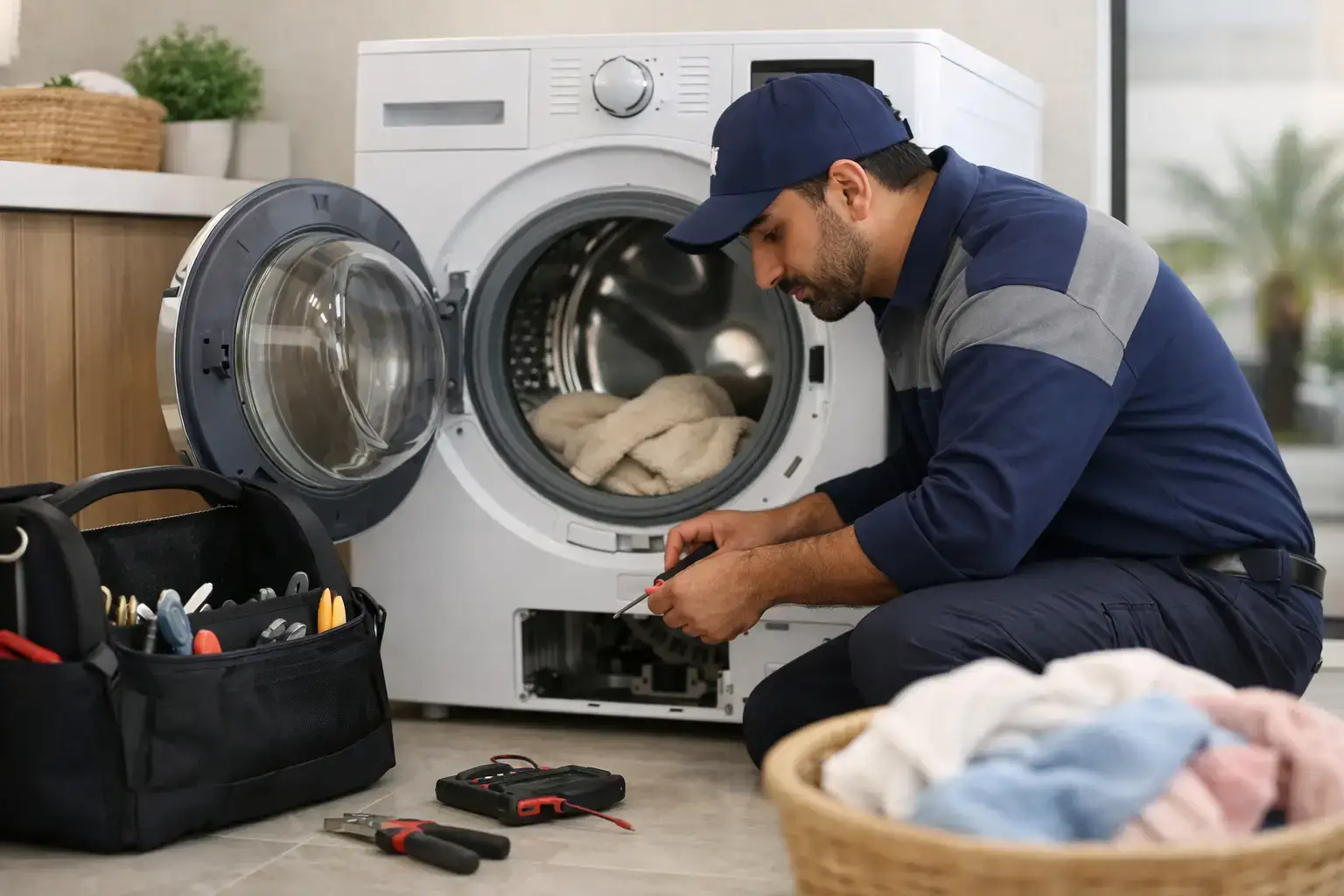
Reliable washing machine repair is more than replacing a part and leaving. The technician should inspect the reported problem, test the relevant components, check for related faults, and explain the findings in clear language. Once the repair is completed, the machine should be tested to confirm that it fills, washes, drains, spins, and operates safely as expected.
For homeowners and tenants, this approach offers peace of mind. For landlords, offices, salons, gyms, and small businesses that depend on regular laundry, it helps reduce downtime and protect daily operations. The right repair decision depends on the machine’s condition, age, maintenance history, and the nature of the fault. Some issues are straightforward, while others require a closer assessment before the correct repair can be determined.
Najam Failka Co. provides on-site appliance support with skilled technicians who focus on clear communication, careful checks, and dependable results. Whether the problem is a leaking front-load washer, a top-load machine that will not spin, or an appliance that has stopped without warning, professional attention can prevent added disruption at home or work.
Keeping Your Washer Working Between Repairs
Simple habits can reduce avoidable washer trouble. Do not overload the drum, empty pockets before washing, use the right detergent quantity, and leave the door or lid slightly open after a wash when appropriate for your model. This allows moisture to escape and helps limit odors around the seal and drum.
Clean the detergent drawer and visible door seal regularly, removing residue and trapped items. Inspect water hoses periodically for cracks, swelling, or loose connections. If the washer begins vibrating more than normal, make sure it is level and standing firmly on the floor. Small changes in performance are worth addressing before they become urgent failures.
A working washer is easy to take for granted until it stops at the worst possible time. When the signs point to a real fault, arranging prompt, professional repair is the practical way to protect your appliance, your property, and the routine that depends on it.

Leave a Reply