
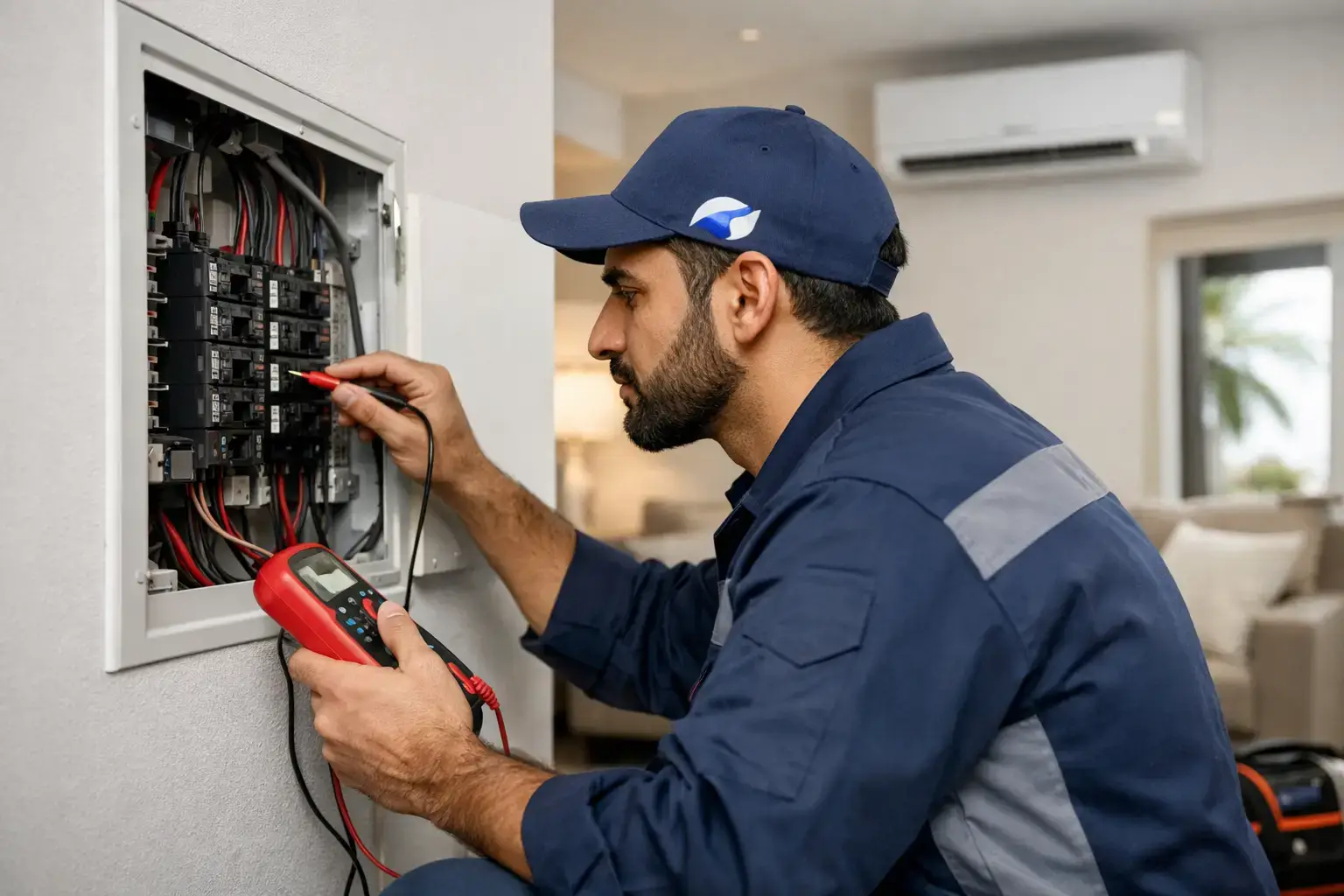
A circuit breaker keeps tripping for a reason: it is detecting a condition that could overheat wiring, damage equipment, or create a shock risk. It can be frustrating when the AC stops, the refrigerator loses power, or part of an office suddenly goes dark, but repeatedly resetting the breaker is not the answer. The safest next step is to identify what was running, reduce the load, and arrange professional electrical service if the issue continues.
What a Tripping Circuit Breaker Is Telling You
A circuit breaker is a safety switch inside the electrical panel. It automatically turns off power when the circuit draws more current than it can safely handle, when there is a fault in the wiring, or when electricity is leaking where it should not.
One isolated trip is not always a major problem. For example, several high-demand appliances may have been operating on the same circuit at once. A breaker that trips again immediately, trips repeatedly, feels hot, makes noise, or has a burning smell needs prompt attention. Those symptoms can point to a wiring fault, a failing appliance, or a worn breaker that should be checked by a qualified technician.
In Kuwait properties, electrical demand often rises sharply during hot weather. Split AC units, central AC equipment, water pumps, refrigerators, and kitchen appliances may all run for long periods. That makes correct circuit protection especially important for homes, apartments, shops, and offices.
Common Reasons a Circuit Breaker Keeps Tripping
The circuit is overloaded
An overload happens when too many appliances pull power from one circuit. The breaker is working as intended by shutting off before the cable overheats.
Common examples include an AC unit operating alongside an electric kettle, microwave, iron, or portable heater on nearby outlets that share the same circuit. In an office, several computers, printers, and chargers connected through extension boards can create the same issue.
Try turning off or unplugging some devices before resetting the breaker once. If the power stays on after reducing the load, the circuit may need to be used more carefully or evaluated for an upgrade. Avoid treating extension cords and multi-plug adapters as a permanent solution for heavy equipment.
A specific appliance has developed a fault
If the breaker trips whenever the same appliance starts, that appliance may be the problem. Faulty compressors, damaged power cords, internal moisture, worn motors, or failed heating elements can all cause excessive current draw or a short circuit.
Air-conditioning equipment is a frequent concern because it has high-starting electrical demand. A split AC that trips the breaker when the compressor starts may have an electrical or mechanical issue that requires diagnosis. The same is true for refrigerators that trip power during compressor cycles and washing machines that trip during filling, spinning, or heating.
Do not continue plugging in an appliance that repeatedly causes a trip. Leave it disconnected until a professional has inspected it. This protects the appliance, the circuit, and everyone using the property.
There is a short circuit in the wiring
A short circuit occurs when a live wire touches a neutral wire or another conductive surface. This creates a sudden surge of current, causing the breaker to trip quickly.
Signs can include a breaker that trips immediately after being reset, a pop or spark from an outlet, scorch marks, a loose outlet cover, or lights that flicker before power cuts out. Rodent damage, aging insulation, loose wiring connections, moisture, and accidental drilling into a concealed cable can all lead to short circuits.
This is not a repair to attempt inside the electrical panel. Keep the breaker off and arrange professional electrical inspection, particularly if you notice heat, smoke, burning odors, or visible damage.
Moisture is affecting an outlet or outdoor equipment
Water and electricity are a dangerous combination. Moisture in a bathroom outlet, kitchen socket, outdoor connection, AC isolator, or damaged conduit can cause protective devices to trip.
After heavy cleaning, a plumbing leak, rain exposure, or AC drainage problems, a circuit may trip because moisture has reached an electrical connection. Do not dry or open electrical equipment while it is energized. Switch off power to the affected circuit if it can be done safely, keep the area clear, and have the source of water and the electrical fault checked.
The breaker itself may be worn or unsuitable
Circuit breakers do not last forever. An older, damaged, or poorly matched breaker can trip too easily, fail to reset properly, or become warm during normal use. However, replacing a breaker without finding the underlying cause can create a serious hazard.
A larger breaker is not automatically the solution. The breaker rating must match the cable size, outlet type, and equipment load. Installing an oversized breaker on undersized wiring can allow cables to overheat before protection operates. A qualified electrician should determine whether the breaker, wiring, or connected equipment needs repair.
Safe Steps to Take Before Calling for Help
Start by noting which areas have lost power and what was running when the trip happened. This simple information helps a technician narrow down the cause quickly.
Turn off appliances on the affected circuit, then reset the breaker firmly once by moving it fully to the OFF position before returning it to ON. If it stays on, reconnect appliances one at a time. When the breaker trips again after a particular item is connected or switched on, stop using that item.
Do not hold a breaker in place, tape it on, repeatedly reset it, or open the panel to touch internal wiring. Do not use an extension cord to bypass an outlet that has failed. These shortcuts can turn a manageable repair into equipment damage, fire risk, or electric shock.
If you are a tenant, report recurring electrical faults to the property manager or owner as well as arranging appropriate service. A recurring problem may affect fixed wiring or circuits shared by more than one room.
When to Treat a Tripping Breaker as Urgent
Turn off the affected circuit and seek urgent professional help if you notice burning plastic, smoke, buzzing, sparks, a hot electrical panel, melted plugs, discolored outlets, or repeated instant trips. Keep children and other occupants away from the panel or damaged outlet.
A breaker that trips when the AC starts in extreme heat also deserves quick attention. It may be tempting to keep resetting it to restore cooling, but a compressor or electrical fault can worsen under repeated restart attempts. Prompt diagnosis can help protect the cooling system and restore safe operation.
For businesses, electrical trips can interrupt refrigeration, point-of-sale equipment, lighting, network devices, and customer comfort. Record the time of the trip and the equipment in use, then keep staff from resetting the circuit over and over. Clear information supports a faster, more accurate repair.
How Professional Electrical Diagnosis Helps
A proper inspection looks beyond the breaker. A technician checks the circuit load, outlet condition, wiring connections, appliance demand, signs of heat damage, and the breaker’s operation. If the fault relates to an AC system, testing may include the compressor, capacitor, wiring terminals, contactor, and insulation condition.
The right repair depends on the cause. It may involve correcting a loose connection, replacing damaged wiring or an outlet, repairing an appliance fault, resolving moisture intrusion, or replacing a breaker with the correct approved type. This is why a clear diagnosis matters more than a quick reset.
Najam Failka Co. provides practical electrical and AC support for homes and businesses that need dependable fault finding and careful on-site checks. A professional technician can confirm that the circuit and connected equipment are operating safely before power is returned to normal use.
Frequently Asked Questions
Is it safe to reset a breaker that has tripped?
It can be safe to reset it once after switching off the connected appliances, provided there is no smell of burning, heat, water exposure, smoke, or visible damage. If it trips again, leave it off and arrange an inspection.
Why does my breaker trip only when the AC turns on?
The AC compressor may be drawing excessive current at startup, or there may be a problem with its electrical components, wiring, or the dedicated circuit. Because AC systems operate under high demand, professional testing is the safer option.
Can a refrigerator cause a circuit breaker to trip?
Yes. A failing compressor, damaged cord, defrost-system fault, or circuit overload can cause a refrigerator to trip a breaker. Keep food cold by minimizing door opening and have the appliance and circuit checked as soon as possible.
A tripped breaker is doing its job by interrupting a potential problem. Treat repeated trips as an early warning, not an inconvenience to override, and get qualified help before a small electrical fault affects your comfort, equipment, or property safety.

1 Comment
AC Wiring Faults: Signs You Need a Technician - Najam Failka Co.
September 25, 2026[…] AC Repair Salmiya […]