A business air-conditioning problem rarely starts with a complete shutdown. It usually starts with one office that feels warmer than the rest, a retail area with weak airflow, or a system that runs longer without reaching the set temperature. In Kuwait’s extreme heat, those early warnings can become an urgent failure quickly. Commercial AC maintenance Kuwait property managers and business owners schedule regularly helps prevent that disruption before it affects staff, customers, stock, or daily operations.
For an office, shop, clinic, restaurant, or apartment building, cooling is not simply a comfort feature. It supports a usable workplace, protects equipment, and helps customers feel confident in the space. Regular maintenance gives technicians the opportunity to find small faults while they can still be corrected with planned service rather than an emergency repair.
Why Commercial AC Maintenance in Kuwait Cannot Wait
Commercial air-conditioning systems work harder in Kuwait than systems in milder climates. High outdoor temperatures, long operating hours, dust, and frequent door openings can all place extra pressure on central AC units, split systems, ductwork, compressors, and electrical components.
When maintenance is delayed, the system may continue operating while efficiency drops. That can mean uneven cooling, higher energy use, extra strain on the compressor, and more frequent breakdowns. A unit that is running is not always a unit that is working properly.
The business impact depends on the property. In a retail store, poor cooling can shorten customer visits and make employees uncomfortable. In an office, it can affect concentration and productivity. For landlords and facility managers, repeated tenant complaints often point to an unresolved cooling issue that needs professional inspection rather than another temporary adjustment.
Planned maintenance is usually less disruptive because it can be arranged around business hours and building access. Emergency service remains essential when cooling stops, but prevention gives owners more control over the condition of their equipment.
What a Professional Maintenance Visit Should Cover
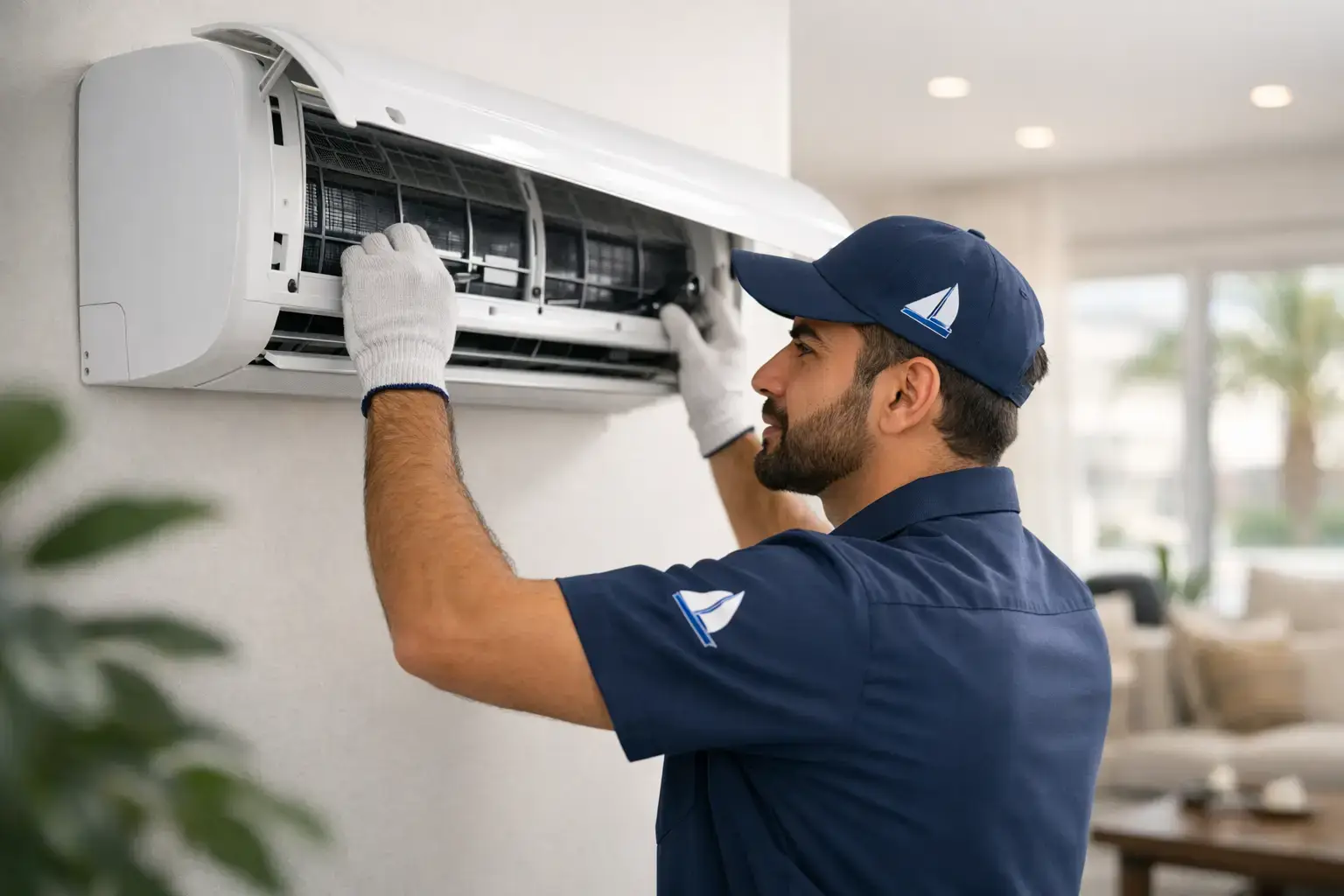
A proper commercial AC maintenance visit is more than cleaning a visible filter. A qualified technician should assess how the full system is operating, identify signs of wear, and confirm that cooling performance is stable before leaving the property.
The exact work depends on whether the property uses central air conditioning, split AC units, packaged equipment, or a combination of systems. Larger properties may require attention to multiple indoor units, outdoor condensers, drains, thermostats, electrical connections, and air distribution points.
A thorough service commonly includes checks such as:
- Cleaning or inspecting air filters, coils, and accessible components affected by dust buildup
- Checking refrigerant performance and investigating signs of an AC gas leak
- Inspecting the compressor, fan motors, capacitors, and electrical connections
- Clearing and testing condensate drain lines to reduce the risk of leaks and water damage
- Testing thermostat response, airflow, temperature output, and unusual operating noise
These checks are connected. For example, a dirty filter can restrict airflow, which may cause the system to work harder and reduce cooling at the vents. A blocked drain can lead to water leakage, odors, or damage to ceiling areas. An electrical connection that is beginning to fail may create intermittent cooling long before the unit stops completely.
Signs Your Business Should Book Service Now
Do not wait for every room to become hot before arranging an inspection. Commercial systems often show clear warning signs when they need attention.
Weak airflow, warm air from vents, rooms that cool at different rates, and unusually long run times are common concerns. Water dripping from an indoor unit, ice on pipes, repeated thermostat adjustments, burning smells, or loud clicking and grinding sounds should also be checked promptly.
A noticeable increase in energy consumption can be another signal. It does not automatically mean the AC unit has a major fault, but it may indicate restricted airflow, dirty coils, refrigerant issues, or a system that is working beyond its normal load.
It also matters if your team has started relying on temporary fixes. Closing off a warm room, adding fans, or lowering the thermostat repeatedly may keep the business going for a short time, but these actions do not solve the underlying problem. A technician can diagnose whether the issue is in the indoor unit, outdoor unit, controls, electrical supply, drainage, or cooling system.
How Often Should Commercial AC Systems Be Maintained?
There is no single schedule that fits every property. A small office with limited hours may have different needs than a busy restaurant, retail location, or building with several continuously used units. System age, equipment type, occupancy, dust exposure, and operating hours all affect the right maintenance frequency.
As a practical standard, commercial AC equipment should be inspected before the hottest period and serviced consistently through the cooling season. Systems that operate for long hours or serve high-traffic spaces often benefit from more frequent checks. Properties near construction activity or exposed to heavy dust may also need closer attention because filters and coils can become dirty faster.
The goal is not to service equipment unnecessarily. It is to match the maintenance plan to how hard the system works and how critical reliable cooling is to the business. A professional technician can recommend a sensible schedule after inspecting the equipment and understanding the property’s daily use.
Maintenance Protects More Than Cooling
Reliable AC maintenance can improve indoor comfort, but its value extends further. Cleaner filters and properly functioning airflow components can support a cleaner indoor environment. Well-maintained drainage systems reduce the chance of water leaks that can damage ceilings, walls, inventory, or furniture.
Maintenance can also help protect expensive components. Compressors, motors, and electrical parts are under stress when airflow is restricted or cooling performance is poor. Finding an issue early may allow for a focused repair before the failure affects additional parts of the system.
For businesses with customers on site, dependable cooling is part of professional service. A comfortable waiting area, shop floor, office, or reception space signals that the property is cared for. Employees notice it too, especially during the hottest months when a small cooling issue can make a large difference to the working environment.
Choosing the Right AC Maintenance Partner
Commercial properties need more than a quick visual check. Choose a repair company that can diagnose central and split AC systems, explain the condition of the equipment clearly, and carry out work with respect for your business operations.
Clear communication matters. You should understand what the technician found, what has been checked, whether a repair is needed, and how the system performed after service. A dependable provider should not leave the property without confirming that cooling, airflow, and basic operation are functioning as expected.
Response time matters as well. When a unit fails during peak heat, a business cannot always wait for a convenient appointment. Working with a local company that provides fast support and emergency availability can reduce downtime when an urgent cooling problem occurs.
Najam Failka Co. provides professional support for commercial AC repair, maintenance, diagnostics, compressor service, and AC gas filling across Salmiya and surrounding areas. The focus is straightforward: identify the issue accurately, complete the required work carefully, and help restore dependable cooling for your property.
Keep a Simple Record of AC Service
For businesses with more than one unit, keeping a basic maintenance record can save time when an issue appears. Note the unit location, service date, reported concern, work completed, and any recommendations from the technician. This makes it easier to spot repeat problems and helps technicians understand the equipment history on future visits.
It is also useful to assign one person to report cooling concerns early. Staff may notice a warm room or unusual noise first, but the issue can be missed if no one is responsible for arranging an inspection. Early reporting gives you the best chance to fix a small concern before it becomes a disruption.
A commercial AC system does not need to fail completely to need professional attention. If your business has uneven cooling, weak airflow, leaks, unusual noise, or equipment that is working harder than normal, arranging maintenance now can protect comfort and keep your operations moving when the heat rises.

Leave a Reply