

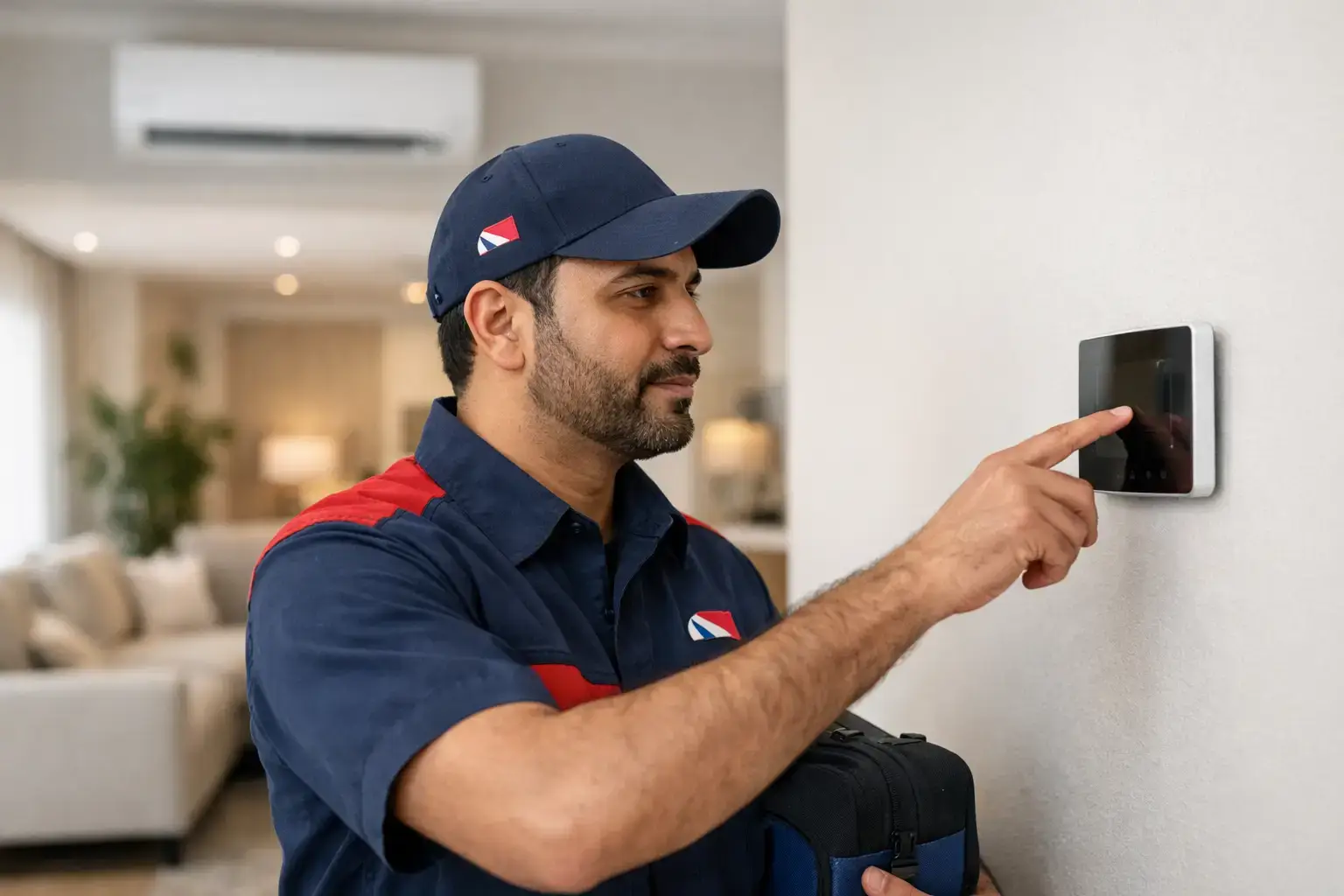
A thermostat can make a working air conditioner appear completely broken. If the screen is blank, the AC will not start, temperatures feel wrong, or the system runs without stopping, AC thermostat replacement may be the right answer. But in Kuwait’s extreme heat, it is important to confirm the cause before replacing a part. A wiring fault, drained batteries, tripped breaker, failed capacitor, or cooling-system issue can create similar symptoms.
For homes, apartments, offices, and shops, the safest approach is a professional diagnosis followed by the correct repair. A properly tested thermostat helps protect comfort, avoid unnecessary parts replacement, and ensure the AC responds reliably when cooling is needed most.
Signs You May Need AC Thermostat Replacement
The thermostat is the control point between you and your air-conditioning system. It reads the indoor temperature, receives your settings, and tells the AC when to start or stop. When it fails or loses communication with the unit, cooling can become inconsistent even when the split or central AC itself is in good condition.
A blank or unresponsive display is one common warning sign. Start with the simple checks: make sure the thermostat has power, replace batteries if your model uses them, and check whether the AC circuit breaker has tripped. If the display remains off or the controls do not respond, a technician should inspect the power supply and wiring before deciding that replacement is necessary.
Incorrect temperature readings are another concern. If the room feels hot but the thermostat reports a much lower temperature, it may not call for cooling at the right time. A thermostat placed near direct sunlight, kitchen heat, or an air vent can also give false readings. In that case, relocation or recalibration may solve the problem without a new unit.
You may also notice that the AC starts and stops too frequently, runs continuously, or does not turn on even though the room is warmer than the set temperature. These symptoms can point to thermostat trouble, but they can also result from a dirty filter, frozen coil, low refrigerant, electrical fault, or damaged AC component. This is why testing matters.
Why a Quick Swap Is Not Always the Best Fix
It is tempting to buy a thermostat and replace it immediately. Some models look simple, and basic battery-powered units can appear easy to change. However, modern AC systems may use different wiring arrangements, low-voltage controls, sensors, and compatibility settings. Installing the wrong thermostat can leave the system unresponsive or cause it to operate incorrectly.
Central AC systems and split AC systems may also have different control requirements. A thermostat that works with one setup may not match another unit, especially if the system includes multiple zones, programmable controls, heat functions, or a specialized indoor control board.
There is also a safety issue. Thermostat wiring is usually low voltage, but the AC equipment connected to it involves electrical components that should be checked carefully. Turning off the wrong breaker, reconnecting wires incorrectly, or overlooking damaged insulation can create a larger repair problem. For occupied homes and businesses, avoiding extended downtime is usually worth more than attempting an uncertain repair.
What a Professional Thermostat Check Should Include
A qualified AC technician does more than look at the thermostat screen. The goal is to identify whether the control is truly faulty and make sure the rest of the system is ready to cool properly after the repair.
The inspection normally begins with the thermostat settings and power source. The technician checks the selected mode, temperature setting, batteries where applicable, display condition, and communication with the indoor unit. They then inspect the wiring connections, terminals, and control voltage for loose, corroded, or damaged connections.
The AC unit itself should also be tested. If the thermostat sends the correct signal but the system does not respond, the fault may be in the contactor, capacitor, circuit board, fan motor, compressor controls, or electrical supply. If the unit starts but does not cool well, the thermostat may not be the main issue at all. Cooling performance, airflow, filters, coils, and refrigerant condition may need attention.
This complete approach provides a clearer answer: replace the thermostat, repair a connection, correct a system fault, or perform AC maintenance. It prevents a situation where a new thermostat is installed but the room is still warm an hour later.
Choosing the Right Replacement Thermostat
The best replacement is not always the most advanced model. The right choice depends on the AC system, the property, and how the space is used.
For a small apartment or a single split AC unit, a straightforward, reliable thermostat or compatible controller may be enough. For a larger home, office, or commercial space, programmable controls can help maintain more consistent temperatures during occupied hours. A business that opens early or operates long hours may benefit from scheduling features, provided the equipment supports them.
Ease of use should matter as much as extra features. A thermostat should have clear controls, accurate readings, and settings that occupants can understand. If several family members, tenants, or employees use the system, complicated programming can lead to constant changes and unnecessary cooling demand.
Compatibility remains the key requirement. Before installation, the technician should verify the wiring, voltage, system type, and manufacturer requirements. This is especially important when replacing an older thermostat with a newer digital model. A professional can recommend a suitable option based on the actual equipment, not just the appearance of the old control.
Protect Your Comfort After Replacement
Once the new thermostat is installed, it should be tested while the technician is present. The system should start correctly in cooling mode, respond to temperature changes, produce normal airflow, and cycle off when the set temperature is reached. The display and controls should also be explained clearly, including how to change the temperature and what to do if the unit does not respond.
A thermostat replacement is also a good time to address basic AC care. Clean filters support airflow and help the system cool efficiently. Keeping doors and windows closed while the AC is operating reduces the load on the unit. If the air conditioner has been cooling weakly, leaking water, making unusual sounds, or tripping power, mention it during the visit so the technician can check beyond the thermostat.
For landlords and business operators, a reliable temperature control is part of protecting the property and the people inside it. Tenants expect working cooling, and staff or customers can quickly become uncomfortable when an AC system is not responding. Early diagnosis can reduce disruption and help prevent a minor control issue from becoming an urgent failure during a hot day.
When the Problem Needs Urgent Attention
Arrange prompt professional support if the thermostat is blank and the AC will not start during high heat, if there is a burning smell, if breakers keep tripping, or if you see damaged wires. Do not keep resetting electrical breakers repeatedly or try to force the system to run. These signs may indicate an electrical issue that needs careful inspection.
If the thermostat appears normal but the AC runs constantly without cooling, switch the system off if possible and request a diagnostic check. Continuous operation can place extra strain on the equipment and may increase the risk of further damage.
Najam Failka Co. provides professional AC diagnostics and repair support for homes and businesses, with technicians who check the full system rather than guessing at the cause. Whether the issue is a faulty thermostat, a wiring problem, or a cooling fault elsewhere in the unit, clear testing helps restore dependable operation.
When your AC control stops making sense, do not wait for the next heatwave to test your patience. A proper thermostat inspection gives you a clear answer and helps keep your space comfortable when it matters most.

Leave a Reply