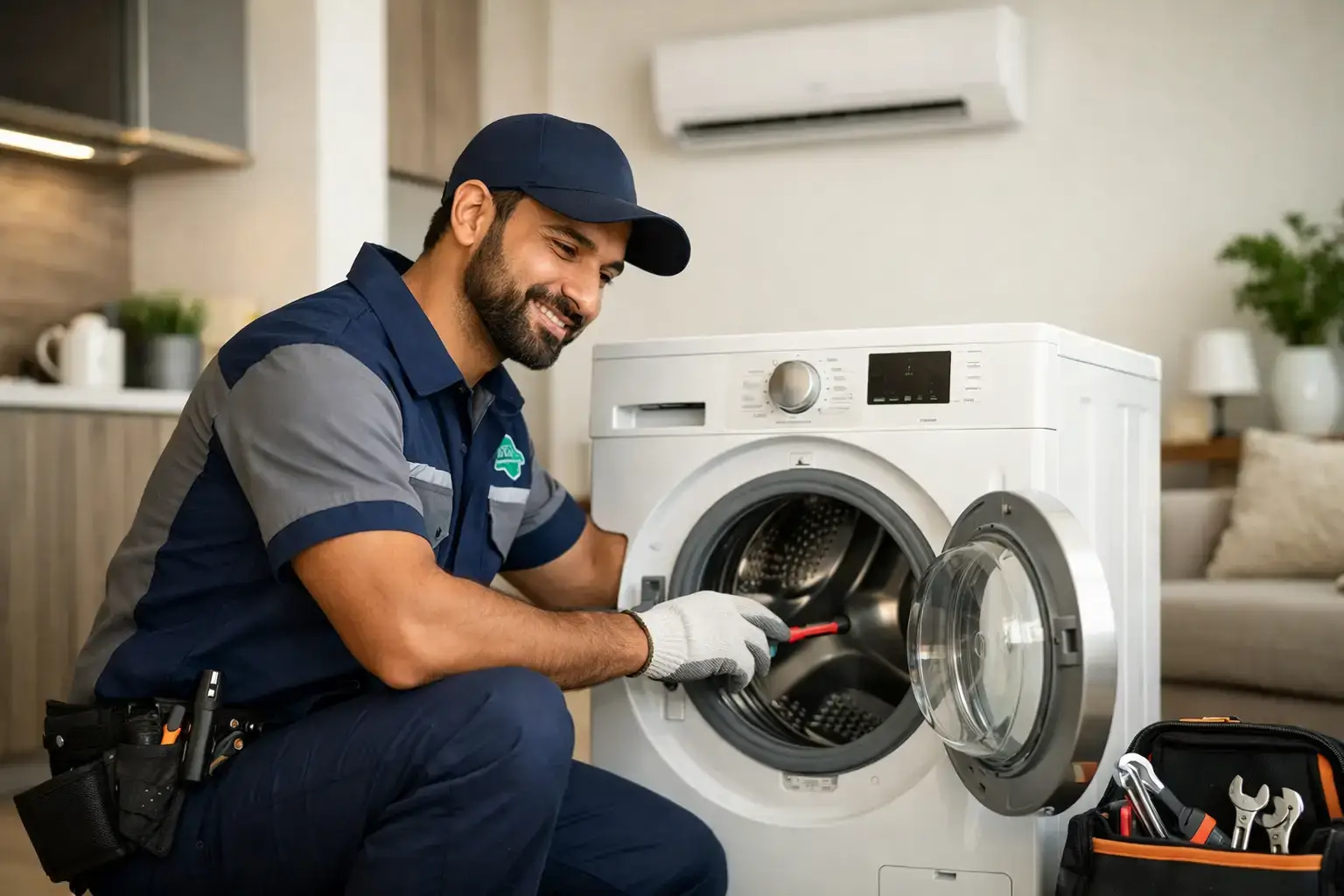
A washer that stops with a drum full of water can disrupt an entire household quickly. Laundry piles up, towels stay wet, and a small leak can threaten flooring or nearby electrical outlets. When you need washing machine repair Salmiya residents can depend on, the priority is not guessing at the fault. It is finding the cause safely, restoring normal operation, and confirming the machine completes a proper cycle before the technician leaves.
Signs Your Washing Machine Needs Professional Attention
Not every interruption means the machine has failed completely. A loose plug, an open water valve, or an unbalanced load can sometimes explain the problem. But repeated faults, unusual sounds, water leaks, and poor washing results are clear signals that the appliance needs a closer inspection.
A washer that will not start may have a door-lock issue, control problem, damaged power connection, or fault in the start system. If the display lights up but the drum does not move, the cause could involve the motor, belt, capacitor, or internal wiring. These parts should be checked by a qualified technician rather than handled through trial and error.
Water Will Not Drain
Standing water after a wash cycle is one of the most common reasons for a service call. The drain hose may be bent or blocked, the filter may be clogged, or the drain pump may have failed. A technician can inspect the drainage path, remove blockages where appropriate, and test whether the pump is operating correctly.
Do not keep restarting a machine that cannot drain. Repeated attempts can place extra strain on the pump and increase the chance of overflow. Switch off the appliance at the power source and keep children away from the area until the water issue is addressed.
The Washer Shakes, Bangs, or Moves Across the Floor
A heavy load of bedding or towels can make even a healthy washer shake if the items gather on one side of the drum. Pause the cycle, redistribute the load, and make sure the appliance is level. If the shaking continues with normal-sized loads, worn shock absorbers, suspension components, bearings, or installation issues may be responsible.
Loud grinding, metal-on-metal noise, or severe movement should never be ignored. Continued use can cause further damage to the drum, motor, cabinet, or water connections.
Water Is Leaking From the Machine
Leaks may appear at the door seal, inlet hose, drain hose, detergent drawer, pump area, or from beneath the appliance. Even a small amount of water deserves attention, especially in apartments where moisture can affect neighboring spaces or electrical systems.
Avoid using tape or temporary patches on damaged hoses. A proper repair begins with identifying exactly where the water is coming from. The visible puddle is not always the source of the problem.
Safe Checks Before You Request Washing Machine Repair in Salmiya
A few simple checks can help you explain the issue clearly and may rule out an easy external cause. First, make sure the machine is plugged in securely and that the electrical outlet has power. Check whether the water supply valves are fully open and look for sharp bends in the inlet or drain hoses.
If the machine is displaying an error code, take a photo of it or write it down. Note when the fault happens: at startup, during filling, while spinning, or when draining. This information gives the technician a better starting point and helps reduce unnecessary delays during the visit.
You can also check whether the door is closing fully and whether the load is unusually heavy. For front-load machines, inspect the visible edge of the door gasket for trapped clothing or obvious tears. For top-load machines, make sure the lid closes correctly.
Do not remove panels, bypass the door lock, handle exposed wiring, or tip a water-filled washer on its side. Washing machines combine water, moving parts, and electricity. A safe inspection is more valuable than a risky DIY attempt that creates a larger repair.
What a Professional Washer Repair Visit Should Include
A dependable repair process starts with listening to the symptoms, then testing the appliance rather than replacing parts based on a guess. A technician should check the power supply, water intake, drainage, drum movement, spin function, controls, and visible connections as needed.
For example, a machine that does not spin may be responding to a drainage fault rather than a damaged motor. Many washers will not enter a high-speed spin if water remains inside the drum. Likewise, a poor wash result could come from low water flow, a blocked dispenser, incorrect detergent use, or an issue with the heating or control system. Accurate diagnosis matters because the same symptom can have several causes.
After the repair, the machine should be tested through the relevant part of its cycle. If the original problem occurred while draining, the drain function should be checked. If it happened during spinning, the technician should confirm that the washer spins steadily without abnormal noise or movement.
Najam Failka Co. provides on-site appliance support with professional communication, practical diagnostics, and careful checks designed to get homes and businesses back to normal operation.
Repair or Replace: The Decision Depends on the Fault
When a washing machine breaks down, replacement is not always the best answer. A blocked pump, worn belt, faulty inlet valve, damaged door lock, or leaking hose can often be repaired when the rest of the appliance is in sound condition. A focused repair may restore dependable use without the disruption of purchasing and installing another machine.
Replacement may make more sense when there is major corrosion, serious drum or bearing damage, repeated control-board faults, or several worn components in an older unit. The availability of suitable parts and the machine’s overall condition also matter. A professional inspection helps you make the decision based on the actual fault, not frustration after one failed wash cycle.
For landlords and business operators, speed and reliability are especially important. A shared laundry appliance or staff-use washer can affect tenants, employees, and daily operations. In those cases, clear fault reporting and prompt action help limit downtime.
Habits That Help Your Washer Last Longer
Good day-to-day use reduces stress on the machine. Avoid consistently overloading the drum, and do not force large items into a washer that does not have enough space for them to move. Use the recommended amount of detergent because excess soap can leave residue in the drawer, hoses, and drum.
Check pockets before loading clothes. Coins, keys, pins, and small objects can damage the pump, drum, or drain system. Leave the door or lid slightly open after a cycle when practical so moisture can escape and unpleasant odors are less likely to develop.
It also helps to inspect inlet and drain hoses periodically for wear, bulges, looseness, or cracking. If a washer begins making a new noise, taking longer to finish, or leaving clothes wetter than usual, arrange an inspection before a minor issue becomes a sudden breakdown.
Get Help Before a Small Fault Becomes a Bigger Problem
A washing machine should make daily life easier, not create a water, electrical, or safety concern. If yours is leaking, refusing to drain, stopping mid-cycle, or making alarming noises, turn it off and arrange qualified support. A careful repair can protect your home, reduce disruption, and give you confidence that the next load will finish the way it should.

Leave a Reply