

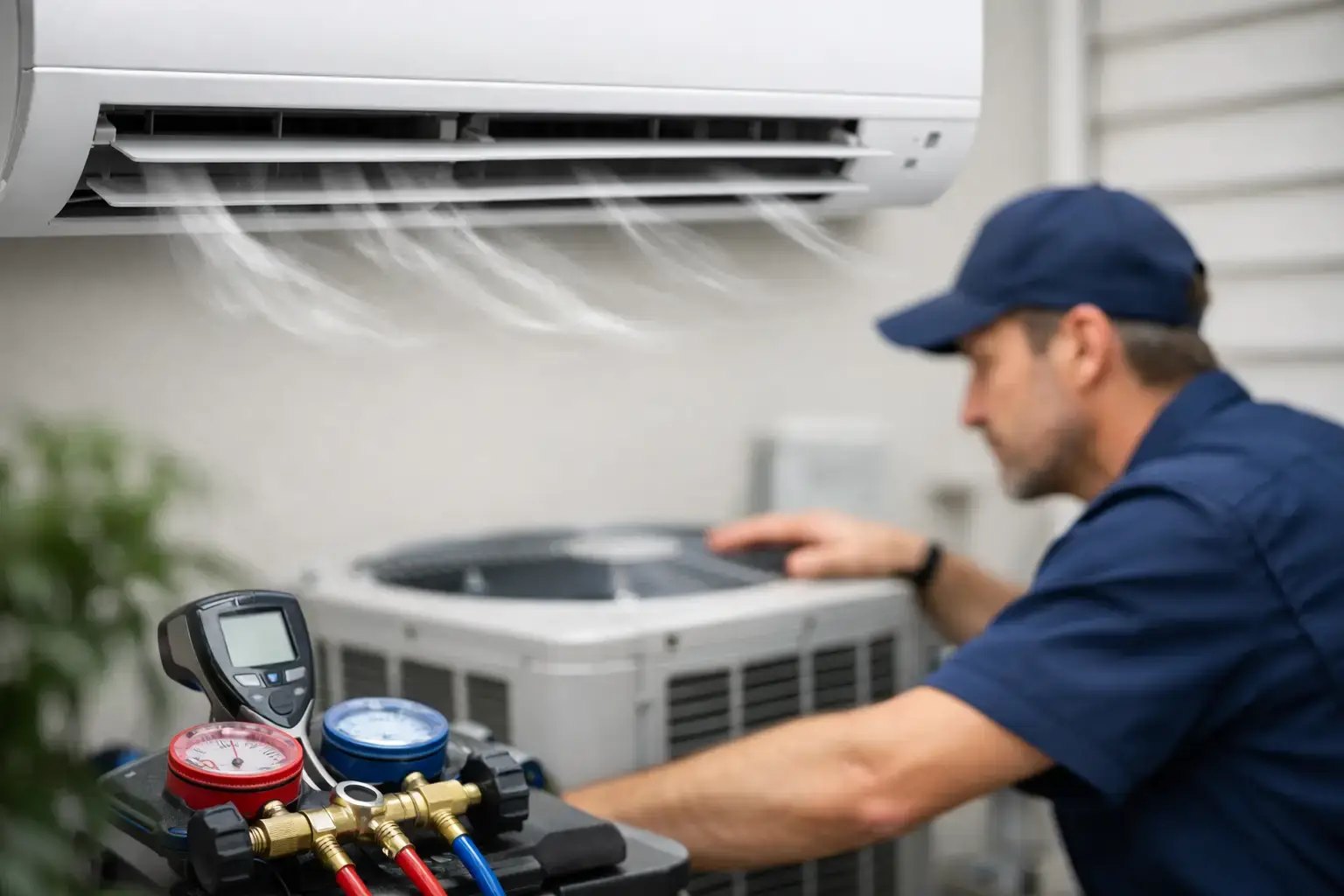
When central AC weak cooling turns a normally comfortable room into a hot, sticky space, the problem needs attention quickly. In Kuwait, an AC system that is running but not cooling properly can affect sleep, family comfort, office productivity, and equipment inside the property. The cause may be simple, such as a blocked filter, or it may involve refrigerant, airflow, electrical components, or the compressor.
A central AC unit does not need to stop completely to have a serious fault. Weak air from vents, uneven temperatures between rooms, long cooling cycles, or a thermostat that never reaches the set temperature are all signs that the system is underperforming. A proper inspection finds the actual cause before a small issue becomes a larger repair.
Why Central AC Weak Cooling Happens
Central air conditioning relies on several components working together: the thermostat, indoor unit, blower, evaporator coil, ductwork, outdoor condenser, refrigerant lines, and electrical controls. If one part has a fault, the system may still run but deliver limited cooling.
The most common issue is restricted airflow. A dirty air filter can reduce the amount of air moving through the indoor unit. Dust buildup on the evaporator coil can create the same result. The system may run longer than usual, use more electricity, and still leave rooms warm.
Another frequent cause is low refrigerant. Refrigerant does not normally get used up like fuel. If the level is low, there is usually a leak that needs to be located and repaired before the system is refilled. Adding gas without checking for a leak may provide short-term cooling, but the problem can return quickly.
Weak cooling can also come from outdoor-unit problems. The condenser releases heat from the building, so it needs clean coils, working fans, correct electrical supply, and proper ventilation around the unit. When heat cannot leave efficiently, the central AC cannot cool the indoor air as it should.
Start With Safe, Simple Checks
Before arranging a repair visit, there are a few safe checks a property owner can make. These checks do not replace a technician’s diagnosis, but they can identify an obvious problem and help explain the symptoms clearly.
First, check the thermostat setting. Set it to cooling mode and choose a temperature below the current room temperature. If the thermostat display is blank, inaccurate, or unresponsive, it may have a battery, wiring, or control issue.
Next, inspect the return-air filter if it is accessible. A filter covered in dust restricts airflow and should be replaced with the correct size and type. Do not run the unit without a filter, since dust can enter the indoor coil and create a more expensive cleaning or repair need.
Walk through the property and make sure supply vents are open and not blocked by furniture, curtains, boxes, or shelves. In offices and retail spaces, changes in partitions or room layouts can accidentally block return-air paths. Cooling needs room to circulate.
You can also look at the outdoor unit from a safe distance. Leaves, plastic bags, dust, or stored items around it can limit airflow. Do not remove electrical panels, touch wiring, wash the coils with high pressure, or try to open refrigerant lines. Those jobs require proper tools and trained handling.
Signs the Problem Is More Than a Dirty Filter
A filter replacement may improve airflow, but certain symptoms indicate that professional AC diagnostics are needed. If the unit blows warm air, trips the breaker, makes a loud buzzing or grinding sound, leaks water indoors, freezes up, or starts and stops repeatedly, turn the system off if it is safe to do so and arrange service.
Ice on the indoor coil or refrigerant pipes is especially important. It can happen because of poor airflow, a dirty coil, a blower problem, or low refrigerant. Continuing to run a frozen system can strain the compressor and increase the cost of repair. Switch the cooling mode off and allow the ice to melt naturally. Avoid chipping ice with tools, which can damage the coil.
Electrical faults should also be handled carefully. A weak capacitor, damaged contactor, loose connection, or failing motor can make the outdoor unit run irregularly or not start at all. These parts are not safe for untrained repair because AC equipment uses high-voltage electrical components.
Airflow Problems Can Affect Only Part of the Property
Not every weak-cooling complaint affects the whole building equally. If one room is warm while nearby rooms cool normally, the issue may be related to ductwork, a closed damper, a blocked vent, insulation gaps, or an airflow balance problem.
In larger villas, offices, and commercial units, central AC systems may have zones that operate differently. A faulty zone control, thermostat, or damper can leave one area uncomfortable even though the main system appears to be working. This is why a technician should check temperatures, air volume, controls, and duct condition rather than assuming the outdoor unit is the only problem.
High heat, direct sun exposure, crowded rooms, cooking equipment, and frequent door opening can also put extra demand on an AC system. That does not always mean the unit is faulty. However, if cooling has noticeably changed from previous summers under similar conditions, there is likely a maintenance or repair issue worth checking.
What a Professional Central AC Inspection Should Cover
Reliable central AC repair starts with diagnosis, not guesswork. A qualified technician should listen to what changed, inspect the system safely, and explain the findings in clear language before recommending work.
A proper visit may include checking the thermostat operation, filter condition, blower performance, indoor coil cleanliness, drain line, electrical connections, condenser fan, compressor operation, and refrigerant pressure. The technician may also measure supply and return-air temperatures to confirm whether the system is removing heat effectively.
If refrigerant is low, the right approach is to identify the likely leak source, repair it where practical, test the system, and refill it to the correct level. If a coil is dirty, cleaning should be done carefully to protect fins and drainage components. If the problem is a worn capacitor or contactor, the replacement part should match the unit’s requirements.
For older systems, repair versus replacement depends on the condition of the compressor, repeated gas leaks, part availability, energy use, and the overall age of the equipment. A less expensive repair is not always the best value if the same unit is likely to fail again during peak heat. On the other hand, replacing a system for a minor maintenance issue is unnecessary. Clear diagnosis helps property owners make a sensible decision.
Prevent Weak Cooling Before the Hottest Days
Central AC maintenance is usually less disruptive and less costly than an emergency breakdown. Filters need regular attention, especially in dusty conditions. Indoor and outdoor coils benefit from scheduled cleaning, while drain lines should be checked to prevent water leaks and humidity problems.
It also helps to schedule professional maintenance before the hottest period, when AC systems operate for longer hours. A technician can identify weak electrical components, reduced airflow, drainage problems, and refrigerant concerns before they lead to a no-cooling call.
For rental properties and businesses, keeping a record of service dates and reported symptoms makes future repairs faster. A note such as “the office near the entrance stays warm after 2 p.m.” gives the technician more useful information than simply saying the AC is weak.
When Fast Repair Support Matters
Call for prompt service when weak cooling affects children, elderly residents, customers, staff, or temperature-sensitive equipment. The same applies when there is a burning smell, repeated breaker trips, water near electrical components, loud mechanical noise, or no cooling during extreme outdoor heat.
Najam Failka Co. provides central AC diagnostics, maintenance, gas filling, compressor service, and repair support for homes and businesses in Salmiya and across Kuwait. A professional technician can check the full cooling system, explain the fault clearly, and confirm that cooling is restored before leaving the property.
Do not wait for weak cooling to become a complete AC failure. Early attention can protect comfort, reduce strain on the system, and give you a better chance of solving the problem with a straightforward repair.

Leave a Reply