
An apartment power failure can become urgent quickly in Kuwait, especially when the AC stops during hot weather or a refrigerator is full of food. The right first steps protect your family, appliances, and electrical system while helping you get the problem resolved without delay.
Before touching a breaker or unplugging equipment, find out whether the outage affects only your apartment or other units and common areas. That simple detail helps identify whether you are dealing with an internal electrical fault, a building-wide issue, or a utility interruption.
First Steps During an Apartment Power Failure
Start by checking the lights in the hallway, stairwell, elevator area, or nearby apartments if it is safe to do so. If these areas are also dark, contact your building manager or security team right away. They can confirm whether the building has a main electrical problem, generator issue, or utility supply interruption.
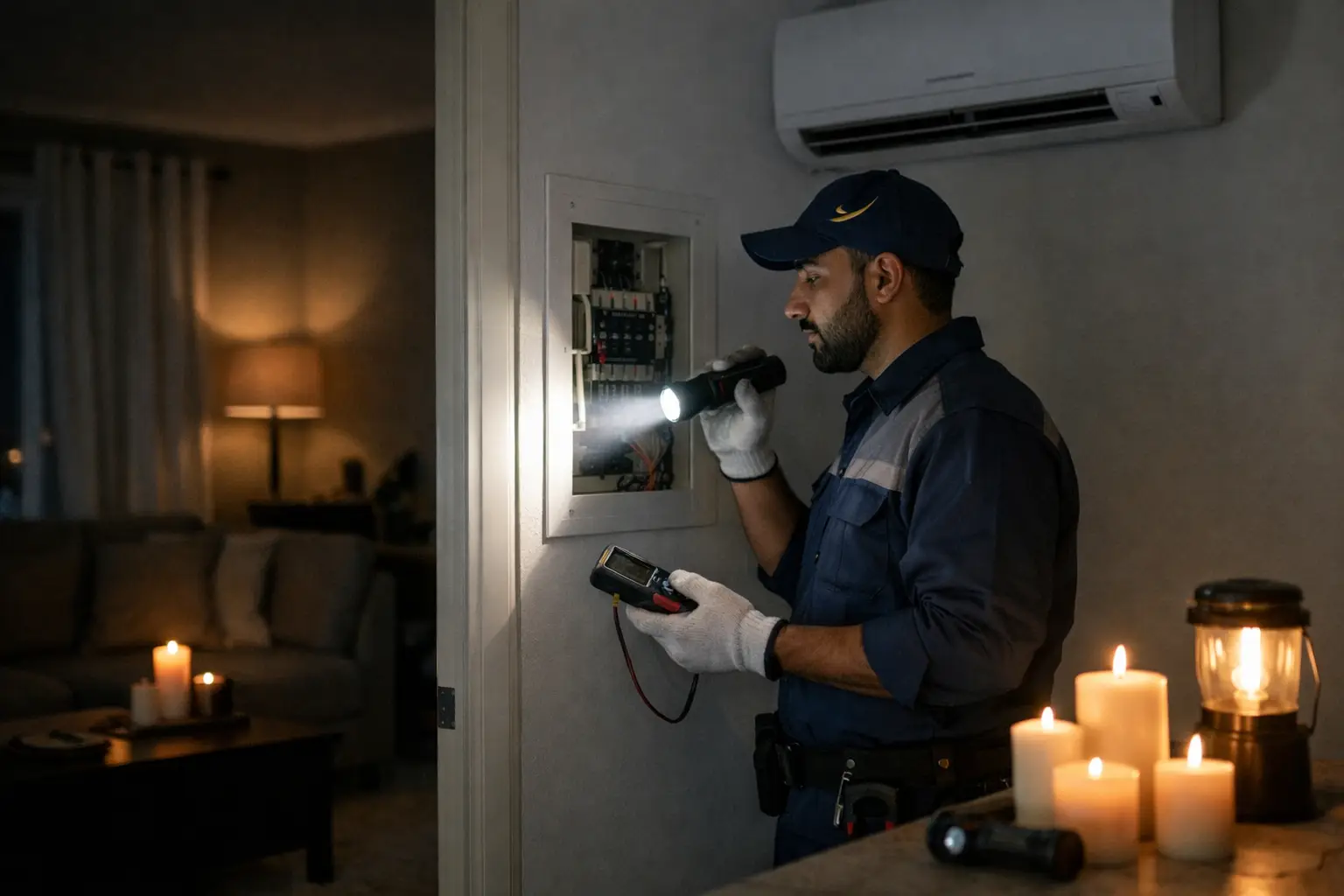
If neighboring units still have electricity, the fault may be limited to your apartment. Check whether any circuit breakers in your electrical panel have moved to the off position or the middle tripped position. A tripped breaker can happen when too many high-demand appliances run on the same circuit, such as an AC unit, water heater, microwave, washing machine, or kettle.
Switch off or unplug appliances on the affected circuit before resetting a breaker. Then reset it once by moving it fully off and then back on. If power returns and stays on, avoid reconnecting every appliance at the same time. Bring them back one by one to see whether a particular unit causes the breaker to trip again.
Do not continue resetting a breaker that trips repeatedly. Repeated tripping can point to a damaged appliance, overloaded circuit, loose connection, wiring fault, moisture problem, or AC electrical issue. That is a job for a qualified technician, not a trial-and-error repair.
Know When the Problem Is Dangerous
Some electrical warning signs require immediate action. Turn off the power from a safe location if possible, keep everyone away from the affected area, and contact building management and a professional repair service.
Warning signs include a burning smell, smoke, sparking outlets, buzzing from the electrical panel, hot switches, discoloration around sockets, or a shock when touching an appliance. Water near outlets, extension cords, or the electrical panel is also dangerous. Never touch electrical equipment with wet hands or while standing on a wet floor.
If there is smoke or fire, leave the apartment and contact emergency services immediately. Do not use water on an electrical fire. Your safety comes before protecting appliances or restoring service.
Power failures can also affect elevators, automatic gates, water pumps, and emergency lighting in apartment buildings. Avoid using elevators until building management confirms that the power supply is stable. If you operate a shop, office, or other small business from an apartment or commercial unit, protect staff and customers first, then secure sensitive equipment once it is safe.
Protect AC, Refrigerators, and Other Appliances
A sudden loss of power can interrupt essential appliances, but the period when power returns also matters. Electrical surges or unstable voltage can damage sensitive components in split AC systems, refrigerators, washing machines, routers, televisions, and chargers.
When the power goes out, switch off major appliances if you can do so safely. This reduces the load when electricity returns and helps prevent several high-demand devices from starting at once. Air conditioners deserve particular attention because compressor motors draw significant power during startup.
After electricity is restored, wait several minutes before turning on your split or central AC. Many modern systems have built-in delay protection, but giving the system time before restarting is a sensible precaution after an outage. If the AC makes unusual noises, trips the breaker, fails to cool, or displays an error code after power returns, leave it off and arrange a professional inspection.
Keep refrigerator and freezer doors closed as much as possible. A closed refrigerator generally keeps food cold for about four hours. A full freezer can hold its temperature for roughly 48 hours, while a half-full freezer may stay cold for about 24 hours. These times can vary with room temperature and how often the doors are opened, so use caution if the outage lasts longer.
Do not rely on an extension cord as a permanent solution after a power failure. Overloaded extension cords can overheat, especially when used with AC units, refrigerators, washing machines, or other high-power equipment. A temporary workaround can create a more serious electrical hazard.
Common Causes of Power Loss Inside an Apartment
An apartment outage is not always caused by the same problem. A breaker that trips once after several appliances are used may simply indicate an overloaded circuit. A breaker that trips whenever one specific appliance runs can indicate that appliance needs repair.
AC systems are a common source of electrical strain in Kuwait because they work hard for long periods. A faulty capacitor, compressor issue, damaged wiring, weak connection, or incorrect electrical load can cause an AC unit to trip a breaker or shut down. Turning the AC back on repeatedly will not solve the underlying issue and may worsen component damage.
Refrigerators and washing machines can also cause power problems when motors, wiring, plugs, or internal parts fail. Older sockets, loose wall outlets, damaged plugs, and poor-quality adapters are other frequent sources of intermittent power loss. In some cases, the issue is at the apartment’s main distribution board rather than at an individual appliance.
The cause matters because the right repair depends on it. Replacing an outlet will not resolve a compressor fault, and repairing an appliance will not correct damaged apartment wiring. A careful diagnosis prevents unnecessary work and helps ensure the electrical supply remains stable after the repair.
What Tenants and Landlords Should Report
Clear details help building management and technicians respond faster. Note the time the power failed, whether other apartments are affected, which rooms lost power, and whether a breaker tripped. Mention any appliance that was running at the time, especially an AC unit, washing machine, refrigerator, oven, or water heater.
Tell the technician about warning signs such as a burning odor, flickering lights, a buzzing sound, warm outlets, or repeated breaker trips. Photos of the electrical panel position can be useful if taken safely, but never remove the panel cover or handle exposed wiring.
Tenants should report building-level faults promptly and avoid altering fixed wiring, panels, or shared electrical equipment. Landlords and property managers should treat repeated electrical complaints seriously, even if power returns after a reset. Intermittent faults often become more disruptive over time, particularly under heavy AC demand.
When to Request Professional Electrical Help
Professional support is the safest choice when power does not return after one breaker reset, the same breaker trips again, only certain rooms have no electricity, or an appliance appears to be causing the issue. It is also the right call after a voltage fluctuation if your AC, refrigerator, or washing machine no longer works normally.
A qualified technician can check the electrical panel, circuit load, outlets, wiring connections, and affected appliances to identify the actual fault. For AC-related electrical problems, the inspection should include the unit’s power supply and major components, not only the thermostat or remote control.
For homes and businesses in Salmiya and nearby Kuwait areas, Najam Failka Co. provides professional support for electrical faults, AC issues, and essential appliance problems. The goal is not simply to restore power temporarily, but to confirm that the source of the failure has been addressed and the affected equipment is operating safely.
A calm response makes a real difference during a power outage: protect people first, avoid repeated breaker resets, keep refrigerator doors closed, and get qualified help when the fault is not clearly a simple overload. Fast action is useful, but safe action protects your apartment long after the lights come back on.

Leave a Reply