

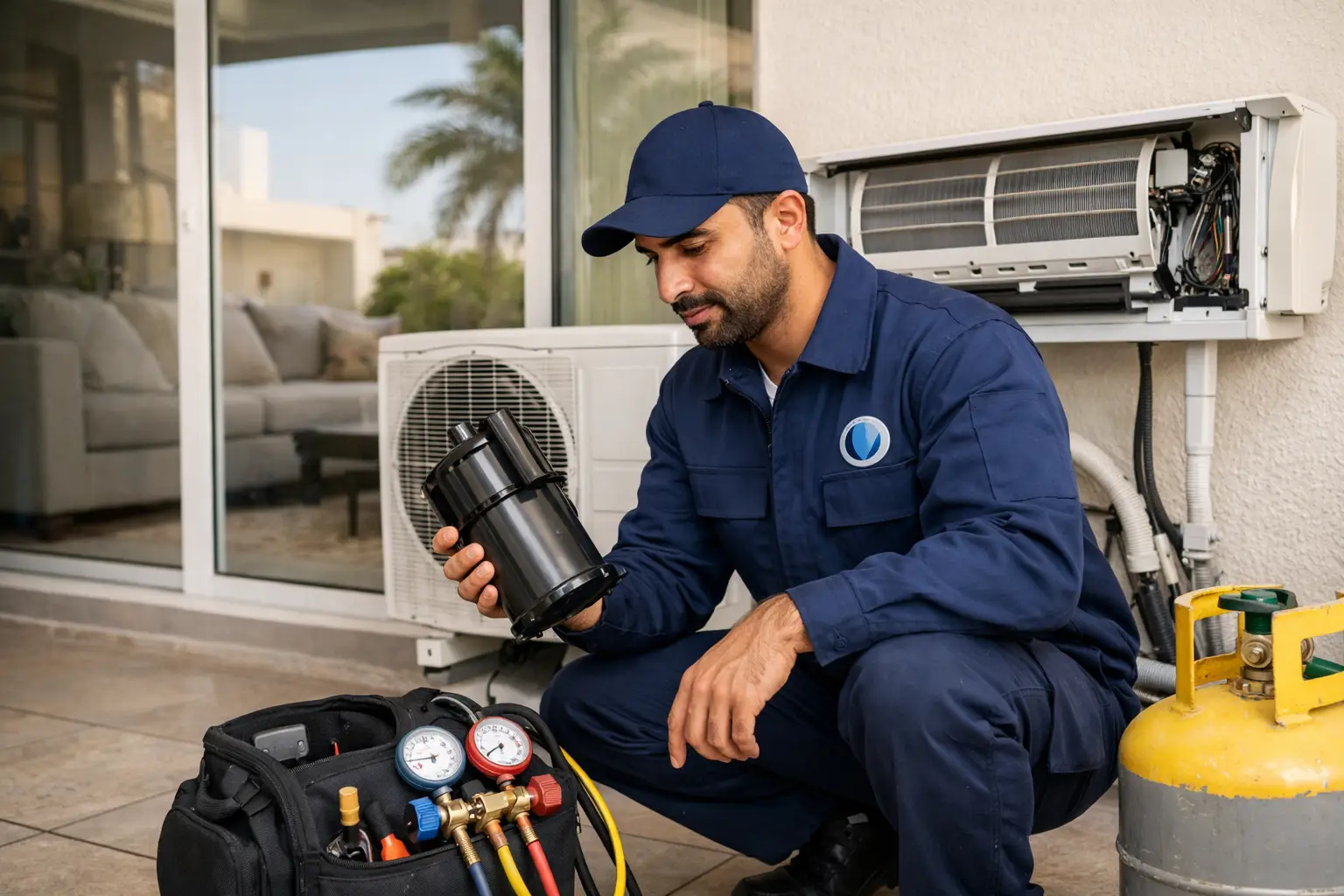
When an air conditioner runs but delivers warm air during a Kuwait summer, the compressor is often the first part people worry about. AC compressor repair cost can vary widely because a compressor issue may be caused by an electrical fault, refrigerant problem, damaged component, or a compressor that has reached the end of its service life. The right next step is a professional diagnosis that identifies the actual fault before any repair work is recommended.
The compressor is the working heart of an AC system. It circulates refrigerant through the unit so heat can be removed from your home, apartment, office, or shop. When it cannot operate correctly, cooling performance drops quickly. A qualified technician should check the complete system, explain what has failed, and confirm whether repair is practical or replacement is the more dependable solution.
Why AC Compressor Repair Cost Is Not One Fixed Amount
A compressor problem is not always a compressor replacement. This distinction matters. A unit may have a faulty capacitor, relay, contactor, wiring connection, thermostat control, or refrigerant leak that creates symptoms similar to compressor failure. Replacing a major component before checking these items can lead to unnecessary work and leave the original issue unresolved.
The final scope of a repair depends on the condition of the system and the work required to restore safe, reliable cooling. A split AC, central AC system, and larger commercial unit can have different component requirements, access conditions, and diagnostic steps. The make, capacity, age, and availability of compatible parts also affect the repair process.
For this reason, reliable service begins with an on-site inspection. The technician should test the electrical supply, inspect the outdoor unit, assess cooling pressures, check for leaks, and review the condition of related parts. Clear diagnosis protects you from guessing and gives you a better basis for deciding what to do next.
Common Problems That Can Look Like Compressor Failure
A warm room does not automatically mean the compressor is damaged. Several common faults can stop an AC from cooling properly while the compressor itself remains serviceable.
A failed start or run capacitor is one example. This small electrical component helps the compressor start and operate. When it weakens or fails, the outdoor unit may hum, struggle to start, or shut down. A worn contactor or loose electrical connection can cause similar behavior.
Low refrigerant is another frequent cause of poor cooling. Refrigerant does not simply get used up under normal operation. If the level is low, there may be a leak that needs to be located and corrected. Adding refrigerant without addressing a leak can provide only temporary relief and may place additional strain on the system.
Dirty condenser coils, a blocked airflow path, or a failing outdoor fan can also make the compressor work harder than it should. Over time, excessive heat can trigger safety shutdowns or cause lasting damage. In older units, the compressor windings or internal mechanical parts may fail, making replacement more likely.
The symptoms can overlap, which is why an accurate diagnosis is more valuable than deciding the compressor is at fault based on warm air alone.
What a Professional Compressor Inspection Should Cover
A complete inspection is designed to find the cause of the failure, not just the most visible symptom. For homeowners and business operators, this means fewer surprises and a clearer explanation of the repair plan.
A technician will normally check whether the thermostat is calling for cooling and whether the system is receiving the proper electrical power. They may test the capacitor, contactor, wiring, overload protection, and compressor electrical readings. The outdoor fan, condenser coil condition, refrigerant performance, and signs of oil or refrigerant leakage should also be reviewed.
If the compressor itself is suspected, the technician needs to determine whether it is electrically open, shorted, grounded, overheated, or mechanically locked. These findings affect whether a related component can be repaired or whether the compressor needs replacement. The inspection should also consider whether the rest of the AC system is in good enough condition to support that work.
For a central system or commercial setup, access, system capacity, and the condition of connected equipment matter as well. A repair that is appropriate for a newer residential split AC may not be the best choice for an older unit with repeated faults.
Repair or Replacement: Making the Practical Choice
When a compressor-related issue is confirmed, the best decision depends on more than the immediate fault. Repairing related electrical components or resolving a refrigerant leak can be a sensible option when the compressor is healthy and the system is otherwise in good condition.
If the compressor has internal damage, replacement may be considered. However, this work can involve more than fitting a new part. The technician may need to inspect the refrigerant circuit for contamination, correct the source of any electrical or cooling problem, replace supporting components where needed, evacuate the system correctly, and test performance after the work is completed.
The age and condition of the AC should be part of the conversation. A relatively new unit with a clear, isolated issue may justify a major repair. An older unit that has frequent breakdowns, poor efficiency, coil damage, or unavailable components may call for a different long-term plan. Honest advice should explain these trade-offs without pushing a one-size-fits-all answer.
For tenants, it is useful to document the symptoms, when they began, and any visible signs such as water leakage, unusual noise, or frequent circuit trips. Landlords and property managers can make faster decisions when they receive a clear diagnostic report and understand whether the fault affects one unit or a wider cooling system.
Signs You Should Request Service Quickly
Compressor damage can become more serious when an AC continues running under strain. Request professional support promptly if the unit blows warm air, repeatedly trips a breaker, makes loud buzzing or grinding sounds, emits a burning smell, or turns on and off without completing a cooling cycle.
Do not keep resetting a tripped breaker or forcing the system to run. Electrical issues can damage components further, and a struggling compressor may overheat. Turn the AC off if you notice smoke, a strong burning odor, or abnormal sounds, then arrange an inspection.
Fast service matters especially in occupied homes, offices, retail spaces, and properties with children, older adults, or equipment that is sensitive to high temperatures. In Salmiya and surrounding areas, a prompt visit can help restore comfort sooner while limiting the risk of a minor fault becoming a larger repair.
How Maintenance Can Reduce Compressor Problems
Maintenance cannot prevent every compressor failure, but it reduces common causes of unnecessary strain. Clean filters help airflow, while clean condenser coils allow heat to leave the system efficiently. Checking electrical components before peak cooling season can reveal worn capacitors, loose connections, or weak contactors before they stop the unit unexpectedly.
Regular servicing should also look for refrigerant leaks, drainage issues, outdoor-unit obstructions, and unusual operating pressures. These checks are particularly valuable after long periods of heavy AC use. A system that cools normally but runs longer than usual, produces new noises, or has a rising electricity demand deserves attention before it fails completely.
Avoid covering or blocking the outdoor unit, and keep the area around it clear enough for airflow and service access. Inside, replace or clean filters according to the unit’s requirements. These simple steps do not replace professional maintenance, but they help the equipment operate under less stress.
Getting a Clear Repair Recommendation
Before approving compressor-related work, ask the technician to explain the diagnosed fault, the condition of the compressor, and whether other parts contributed to the problem. You should understand what work is needed to restore cooling and what testing will be carried out afterward.
A dependable repair service should confirm that the system starts correctly, cools properly, and operates safely before the technician leaves. Najam Failka Co. approaches AC service with this practical focus: identify the fault carefully, communicate the recommended work clearly, and help homeowners and businesses get their cooling back when they need it most.
The most useful question is not simply whether the compressor is bad. It is whether the complete AC system can be restored to reliable operation, and what work is needed to make that result last.

Leave a Reply