

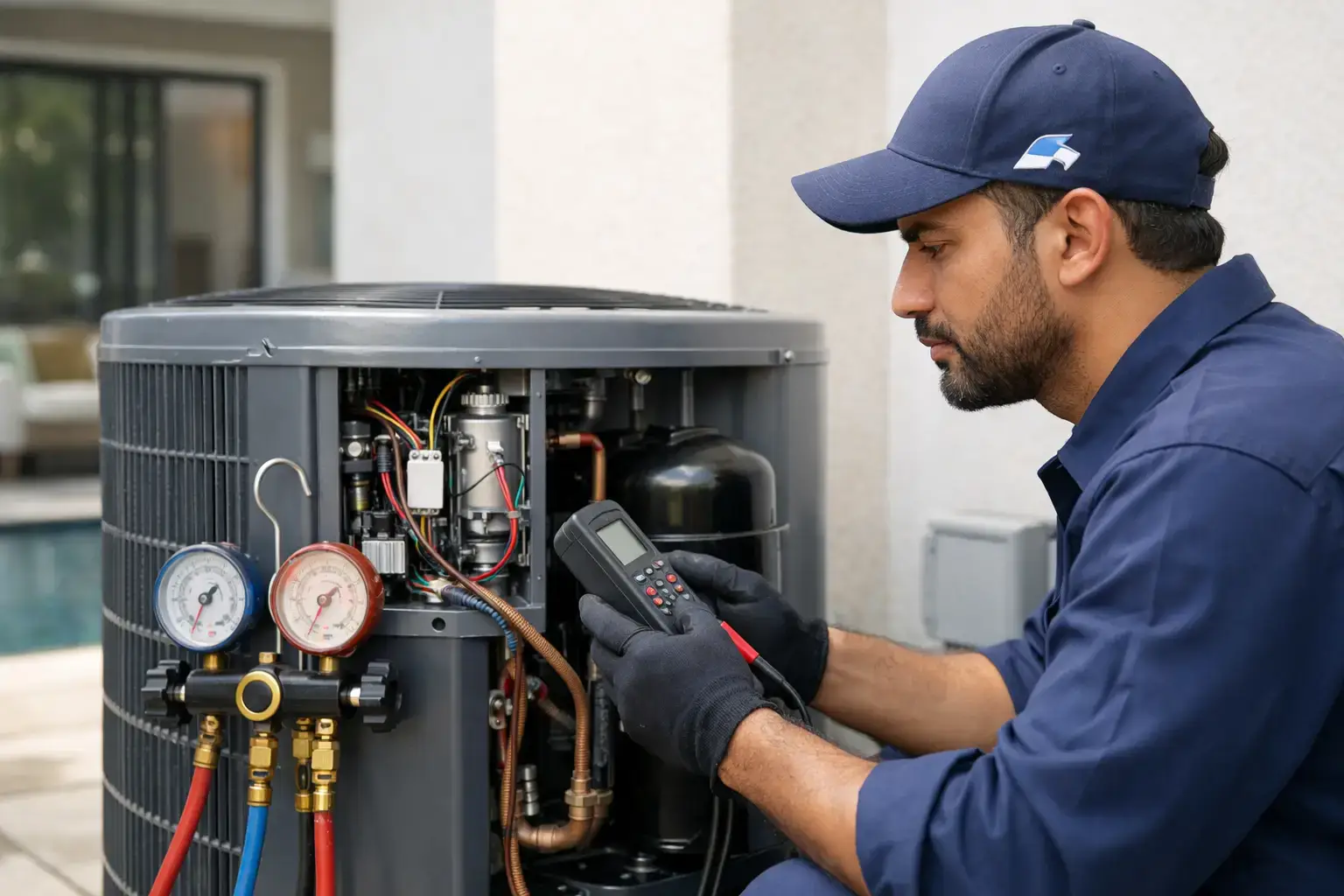
A compressor does not always fail without warning. In many homes and businesses, the first signs are subtle: an AC that takes longer to cool, a unit that makes an unfamiliar sound, or a breaker that trips when cooling starts. Knowing how to identify compressor failure early can help protect your comfort, prevent strain on the rest of the system, and avoid a complete shutdown during Kuwait’s hottest days.
The compressor is the working heart of an air-conditioning system. It pressurizes and circulates refrigerant so heat can be moved out of your indoor space. When it cannot start, maintain pressure, or operate safely, the AC may run but deliver little or no cool air. The same principle applies to refrigerator compressors, although the symptoms and repair process can differ.
How to Identify Compressor Failure in an AC Unit
A failed compressor is one possible cause of poor cooling, but it is not the only one. Dirty filters, thermostat issues, electrical faults, refrigerant leaks, blocked condenser coils, and weak capacitors can create similar symptoms. That is why a professional diagnosis matters before any major repair decision is made.
Still, certain warning signs point more strongly toward compressor trouble.
The AC runs but the air is not cold
If your indoor unit is blowing room-temperature or mildly cool air while the system appears to be running, the compressor may not be circulating refrigerant correctly. You may notice the fan operating normally, but the space never reaches the thermostat setting.
Check the simple causes first. Make sure the thermostat is set to cooling mode, the temperature setting is lower than the room temperature, and the air filter is not heavily blocked. If these basics are in order and cooling remains weak, the outdoor unit needs inspection.
A refrigerant leak can also cause weak cooling and may eventually damage a compressor if the unit continues operating under improper pressure. Adding gas without finding the source of a leak is not a complete solution. A technician should inspect pressures, connections, coils, and system performance before recommending the right repair.
The outdoor unit hums but does not start
A steady humming sound from the outside condenser, followed by no cooling, is a common concern. The compressor may be attempting to start but failing to do so. In some cases, the cause is a faulty capacitor, relay, wiring problem, or voltage issue rather than the compressor itself.
This distinction is valuable because these components can sometimes be repaired or replaced without replacing the compressor. Repeated start attempts, however, can overheat the compressor and create further damage. Turn the system off and arrange an inspection instead of letting it continue humming or cycling.
You hear loud mechanical noises
Normal AC operation includes a low outdoor fan sound and a brief startup noise. Loud banging, clanking, grinding, rattling, or screeching is not normal. A failing compressor can produce a harsh knocking sound when internal parts are damaged or loose.
Noise alone is not proof of compressor failure. A loose panel, fan blade, motor bearing, or debris inside the outdoor unit can also make alarming sounds. But if unusual noise comes with poor cooling, hot air, or repeated breaker trips, it should be treated as an urgent service issue.
The circuit breaker trips repeatedly
An AC breaker may trip when the compressor draws more electrical current than it should. This can happen when a compressor is overheating, struggling to start, or developing an internal electrical short.
Do not keep resetting the breaker. Repeatedly forcing power back to the unit can damage electrical components and increase safety risks. A qualified technician should check the circuit, wiring, capacitor, contactor, compressor windings, and supply voltage to identify the actual cause.
The compressor is unusually hot
The outdoor compressor housing naturally becomes hot during operation, especially in high outdoor temperatures. But excessive heat, a burning smell, or a system that shuts down after a short period can indicate overheating.
Overheating may result from dirty condenser coils, poor airflow around the outdoor unit, low refrigerant, electrical problems, or internal compressor wear. It does not automatically mean the compressor is beyond repair, but it should not be ignored. Switch off the AC if you smell burning insulation or see smoke, then seek urgent professional support.
Symptoms That Can Look Like Compressor Failure
Because several AC faults create similar results, avoid assuming the compressor is the problem based on one symptom. A clear diagnosis protects you from unnecessary work and helps ensure the real fault is corrected.
A dirty air filter can restrict airflow and make rooms feel warm even when the refrigeration system is operating. A frozen evaporator coil may cause poor cooling, water leakage, or ice buildup. A damaged thermostat can prevent the AC from signaling the outdoor unit correctly. Electrical components such as capacitors and contactors may stop the compressor from starting even when the compressor itself is still in good condition.
Low refrigerant is another frequent concern. If the system has lost refrigerant because of a leak, it cannot cool effectively. The compressor may run hotter and work harder, but the proper solution is leak detection, repair where possible, and correct refrigerant charging based on the system’s requirements.
This is why a technician should use proper testing methods rather than rely only on sound or touch. Electrical readings, operating pressures, temperature differences, airflow checks, and visual inspection all help confirm whether the compressor is failing or another component is responsible.
When Compressor Trouble Needs Immediate Attention
Some AC problems can wait for a scheduled visit, but certain symptoms should be addressed promptly, particularly in occupied homes, offices, shops, and properties with children, elderly residents, or heat-sensitive equipment.
Turn the system off and request service quickly if you notice any of the following:
- A burning smell, smoke, sparking, or melted wiring near the AC unit.
- Repeated circuit breaker trips when the AC starts or runs.
- Loud banging or grinding from the outdoor unit.
- No cooling during extreme heat, especially when the unit is cycling on and off.
Keeping a malfunctioning compressor running can put added stress on electrical parts and may turn a repairable issue into a larger system problem. It can also waste electricity while providing little comfort.
What a Professional Compressor Inspection Includes
A proper compressor inspection begins with the complete AC system, not just one part. The technician checks whether the thermostat is calling for cooling and confirms that the indoor and outdoor units are receiving the correct electrical supply. They inspect wiring, connections, capacitors, relays, contactors, and safety controls.
Next, they assess airflow and condenser condition. A blocked filter, dirty coil, or obstructed outdoor unit can cause overheating and poor performance. Refrigerant pressure and cooling operation are then checked to identify leaks, restrictions, or abnormal system behavior.
If the compressor is suspected, electrical tests can help identify issues such as winding damage, grounding faults, or unusually high starting current. The technician also evaluates whether the system has a repairable electrical fault, a refrigerant-related problem, or a compressor that has reached the end of its working life.
For central and split AC systems, the best repair choice depends on the unit’s age, overall condition, refrigerant type, compressor availability, and the condition of related components. Replacing only one part without addressing the cause of failure can lead to another breakdown.
Simple Steps to Reduce Compressor Stress
Homeowners and property managers cannot prevent every compressor issue, but regular care reduces the strain that often leads to failure. Replace or clean filters on schedule, keep the outdoor unit clear of boxes and debris, and do not block air vents inside the property. If the AC begins cooling poorly, arrange a check early rather than waiting until it stops completely.
Routine maintenance is especially useful before the peak summer season. It gives technicians time to clean coils, check electrical parts, inspect drain lines, verify cooling performance, and spot warning signs before the system is under constant demand.
For customers in Salmiya and nearby Kuwait areas, Najam Failka Co. provides professional AC diagnostics, compressor service, maintenance, and fast repair support for homes and businesses. A clear inspection gives you practical answers about what has failed, what can be repaired, and what is needed to restore dependable cooling.
If your AC is humming, tripping power, making loud noises, or no longer cooling the way it should, switch it off when safety is a concern and arrange a qualified inspection. Early action is often the best way to protect your comfort and keep a small fault from becoming a full cooling emergency.

Leave a Reply