

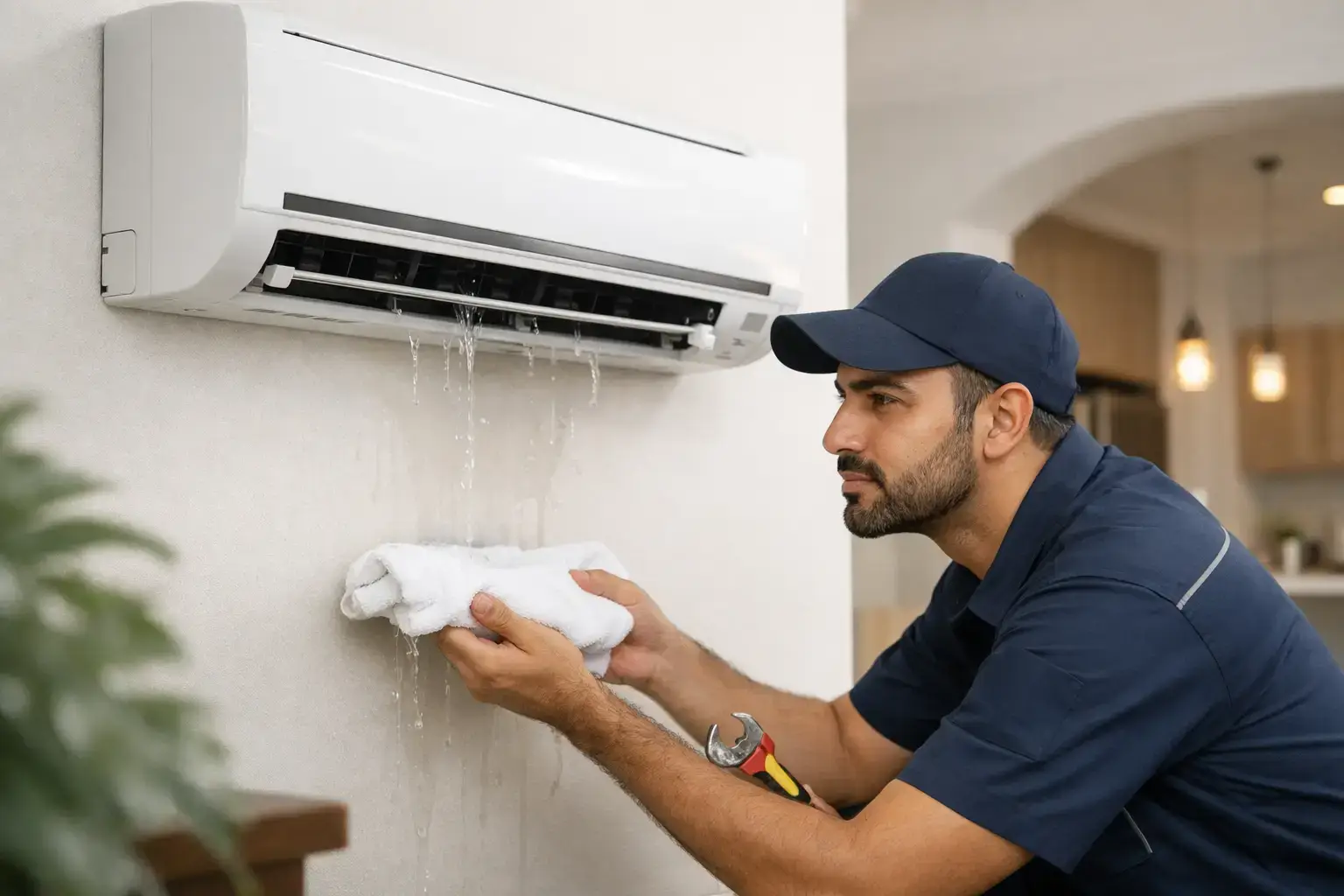
A puddle beneath an indoor AC unit is more than a cleaning problem, especially when Kuwait’s heat means your system may be running for hours at a time. An air conditioner leaking water can stain ceilings, damage drywall, affect flooring, and eventually interrupt cooling if the underlying fault is not corrected.
Water is normally part of the cooling process. Your AC removes moisture from indoor air, then sends that condensation safely outdoors through a drain line. A leak means that water is being blocked, overflowing, or forming where it should not. The right response depends on where the water is coming from, how much is present, and whether the unit is still cooling properly.
Why Is Your Air Conditioner Leaking Water?
The most common cause is a blocked condensate drain line. Dust, dirt, algae-like buildup, and debris can collect inside the line over time. Instead of draining outside, water backs up into the indoor unit and spills from the drain pan. This is a frequent issue with split AC systems that have not received regular cleaning and maintenance.
A dirty air filter can also lead to water leakage. When airflow is restricted, the evaporator coil inside the unit can become too cold and freeze. Once the ice melts, the drain pan may receive more water than it can handle, causing overflow. You may notice weak airflow, reduced cooling, ice on the indoor unit, or water dripping after the AC has been turned off.
Other possible causes include a damaged or rusted drain pan, an incorrectly installed indoor unit, a disconnected drain pipe, or a failed condensate pump on systems that use one. In central AC systems, a blocked drain line or pan problem may show up as water around the indoor air handler, in a utility area, or through a ceiling below the unit.
Low Refrigerant Can Cause Coil Freezing
Low refrigerant, often called AC gas, does not directly create a water leak. However, it can lower the coil temperature enough for moisture to freeze on it. When that ice melts, the system can release a large amount of water at once.
If your AC is leaking water and is also not cooling well, running longer than usual, or forming ice, it needs professional cooling-system diagnostics. Simply adding AC gas without finding and repairing a possible leak is not a lasting solution.
What to Do First When You See Water
Start by protecting the area. Turn off the AC if water is actively dripping from the indoor unit, ceiling, or electrical area. Place towels or a container beneath the leak if it is safe to do so, and move furniture, electronics, documents, or rugs away from the water.
Then check the air filter if you can access it safely. A heavily dusty filter should be cleaned or replaced according to the unit’s requirements. Do not force open panels, insert wires into the drain line, or attempt to dismantle the indoor unit. Those shortcuts can damage the drain components, electrical connections, or evaporator coil.
If ice is visible, switch the system off and allow it to thaw. Do not chip away at ice with sharp tools. Once thawed, the system may still leak again if the filter, airflow, drain, or refrigerant issue has not been resolved.
Call for AC repair promptly when the leak is persistent, the unit is not cooling, water is reaching a wall or ceiling, or there is any electrical concern. A skilled technician can identify the actual source rather than treating only the visible water.
Common Leak Locations and What They May Mean
The location of the water often gives a useful clue. Water dripping from the front or bottom of a wall-mounted split unit commonly points to a blocked drain line, an overflowing pan, or poor drainage due to installation angle. If water is coming from the wall behind the unit, the drain hose may be loose, damaged, or incorrectly routed.
A ceiling stain or drip below a concealed ducted or central AC unit deserves quick attention. The source may be a clogged condensate drain, a cracked pan, insulation damage, or condensation forming on cold ductwork. Waiting can turn a manageable AC repair into ceiling, paint, or electrical damage.
Water around an outdoor unit is often normal during operation, depending on the system and conditions. But standing water that does not drain, water near electrical parts, or a leak combined with poor cooling should still be inspected. The outdoor unit and indoor unit work together, so the visible water is not always located near the actual problem.
Why Regular AC Maintenance Prevents Water Damage
AC maintenance is not only about colder air. It helps keep the condensate drain clear, the filter clean, airflow balanced, and the coil free of heavy dust buildup. During a proper service visit, technicians can inspect drainage, clean key components, check for signs of refrigerant issues, and confirm that the unit drains correctly before they leave.
For homes, routine maintenance is especially valuable before the hottest months, when systems operate under greater strain. For offices, shops, and occupied properties, it can prevent a leak from disrupting staff, customers, stock, or daily operations.
The timing depends on the unit’s use and environment. A lightly used unit may need less frequent attention than one operating daily in a busy home, retail space, or dusty location. If you have pets, frequent indoor activity, construction dust nearby, or several occupants, filters and drainage components may require more regular checks.
When a Water Leak Is an Emergency
Not every drip requires emergency service, but some situations should not wait. Turn the unit off and arrange professional help if water is reaching electrical outlets, switches, wiring, or a distribution board. The same applies if water is leaking through a ceiling, spreading into another room, causing a strong musty smell, or coming from a unit that has stopped cooling.
Landlords and property managers should act quickly when a tenant reports an AC leak. A small issue inside a wall-mounted unit can affect paint, plaster, furniture, and neighboring spaces. Early diagnosis protects the property and helps restore comfort faster.
For businesses, a leak near inventory, computer equipment, customer areas, or electrical systems can affect operations as well as the building. A qualified AC technician can assess the drainage path, cooling performance, and unit condition, then explain what needs to be repaired in clear terms.
Professional Repair Brings the Cause Into Focus
An AC water leak may look simple, but several faults can produce the same symptom. A proper inspection checks the filter and airflow, evaporator coil, drain pan, drain line, unit level, pump where fitted, and overall cooling performance. That method matters because clearing a drain line will not solve a frozen coil caused by low refrigerant, and adding refrigerant will not fix a cracked drain pan.
For homeowners and businesses in Salmiya and nearby Kuwait areas, Najam Failka Co. provides prompt support for split AC and central AC problems, including drainage faults, weak cooling, compressor concerns, maintenance, and cooling-system diagnostics. The goal is not only to stop the visible leak, but to confirm that the system is cooling and draining as it should.
Water beneath your AC is your system asking for attention before a minor drainage fault becomes property damage. Switch the unit off when the leak is active, protect the area, and have the cause checked so your cooling can return to dependable operation.

Leave a Reply