

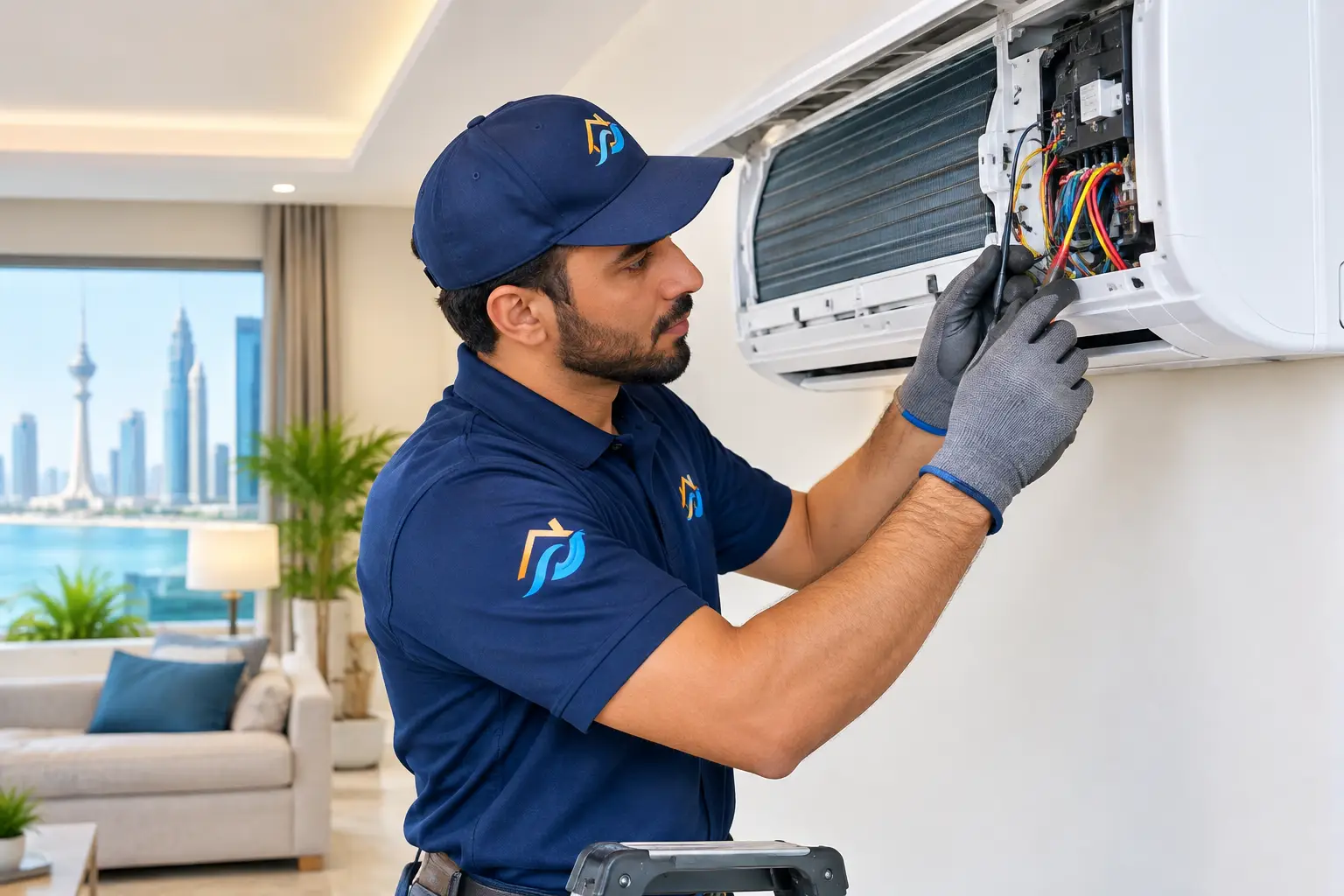
Your AC may still be running, yet the room feels warmer by the hour. Or it starts for a few minutes, trips the breaker, and goes silent. In Kuwait’s heat, AC wiring faults are more than an inconvenience. They can interrupt cooling, damage expensive components, and create a serious electrical safety concern if they are ignored.
Wiring problems are not always visible from the outside. A damaged connection may be inside the indoor unit, outdoor condenser, thermostat wiring, isolator switch, or electrical panel. The safest response is to recognize the warning signs early, switch the unit off if there is any concern about overheating, and have a qualified technician inspect the system.
What Causes AC Wiring Faults?
An air-conditioning system depends on correctly sized cables, secure terminals, insulation in good condition, and stable electrical supply. When one part of that path fails, the system may lose power, cool poorly, run unpredictably, or stop entirely.
Heat is a common factor. Outdoor AC units work under extreme conditions during the summer, and electrical connections can loosen over time as components repeatedly heat and cool. Loose terminals create resistance. Resistance creates more heat, which can discolor wiring, damage insulation, and eventually burn a connector.
Age and installation quality also matter. Older systems may have worn insulation or connections that no longer hold securely. A unit installed with unsuitable cable sizing, poor splices, or an inadequate breaker may operate for a while but develop faults under heavy load. In some properties, water exposure, pest damage, dust buildup, or accidental damage during maintenance can affect wiring as well.
A wiring fault is not always the root cause. A failing compressor, capacitor, fan motor, or contactor can draw abnormal current and place extra stress on the electrical circuit. That is why a proper diagnosis should look beyond the visible wire rather than replacing a connection and assuming the job is finished.
Warning Signs of AC Wiring Faults
A breaker that trips when the AC starts is one of the clearest signs of an electrical problem. It does not automatically mean the breaker itself is bad. The cause could be a short circuit, damaged cable, failing component, or a unit drawing more current than it should. Resetting the breaker repeatedly can make a dangerous condition worse.
Burning smells, smoke, sparking, buzzing, or a hot electrical panel require immediate attention. Turn off the AC from the appropriate switch or breaker if it is safe to do so, keep people away from the equipment, and arrange professional support. Do not touch exposed wires or open the unit to investigate.
Other symptoms can be less dramatic. Your AC may turn on and off at random, fail to respond to the thermostat, blow warm air, or make a clicking sound without starting. Lights may flicker when the compressor attempts to start. You might also notice that the outdoor unit is not running while the indoor fan continues operating.
These symptoms can overlap with mechanical and cooling-system faults. Weak cooling, for example, may be related to dirty coils, low refrigerant, a compressor issue, or incorrect electrical supply. The useful point is not to guess the cause. It is to act before intermittent behavior becomes a complete failure during the hottest part of the day.
When the Problem May Be Outside the AC Unit
Sometimes the air conditioner is working correctly but is not receiving dependable power. A damaged wall isolator, loose outlet connection, overloaded circuit, or fault in the property wiring can affect operation. This is particularly relevant in apartments, offices, and retail spaces where several high-load appliances may share nearby circuits.
A technician should check the AC circuit, voltage supply, breaker condition, and equipment connections as part of the assessment. If the problem is in the building electrical system rather than the unit, addressing that source protects the AC from repeat damage.
Why Repeated Breaker Resets Are a Bad Idea
Circuit breakers are designed to stop electrical flow when they detect an overload or fault. They are not an inconvenience to bypass. If the breaker trips once after a clear power interruption, a careful reset may restore normal operation. But if it trips again when the AC starts or runs, stop using the unit.
Repeated resets can allow damaged wiring or a failing component to heat up again and again. It may also turn a small repair into a larger compressor, control board, or electrical-panel problem. The same rule applies to replacing a breaker with a larger size without an inspection. A larger breaker does not solve excessive current draw. It can remove a layer of protection from the cable and equipment.
For tenants and property managers, documenting when the breaker trips can help speed up diagnosis. Note whether it happens immediately at startup, after several minutes of cooling, only in the afternoon, or when another appliance is operating. Those details give the technician useful direction without putting anyone at risk.
What a Professional AC Electrical Inspection Should Cover
AC electrical work requires more than checking whether power reaches the unit. A thorough visit starts with the reported symptoms and a visual inspection for loose, burned, corroded, or damaged connections. The technician then tests the electrical supply and checks whether the circuit is delivering proper voltage under operating conditions.
The inspection should include key electrical components such as the breaker, disconnect or isolator, contactor, capacitor, terminals, control wiring, and compressor connections. Current draw is also checked against the unit’s expected operating range. This helps identify whether the wiring failed on its own or whether another component is overloading the circuit.
After repairs, the system should be run and rechecked. The goal is not simply to make the AC start. It is to confirm stable operation, safe connections, correct cooling response, and no sign of overheating. This final testing is especially valuable for central AC systems, where one electrical fault can affect multiple rooms or zones.
Safe Steps You Can Take Before Help Arrives
Homeowners and business operators should not attempt to repair AC wiring, tighten energized terminals, or replace electrical components without the right training. Even when the unit appears off, some components can retain an electrical charge.
You can safely take a few practical steps. Turn the AC off if you smell burning, hear arcing, see smoke, or experience repeated breaker trips. Keep the area around the outdoor unit clear and do not spray water into electrical sections. If the fault affects a business space, protect staff and customers by keeping them away from the equipment and using another safe cooling area if available.
For a non-emergency issue, gather the unit details before service arrives. The model information, recent repair history, and a clear description of what happened can reduce delays. Mention whether the unit is split or central AC, whether the indoor or outdoor section is running, and whether a breaker or isolator switch is involved.
Preventing Future AC Wiring Problems
Not every electrical fault can be predicted, but regular maintenance lowers the risk. During an AC service, electrical connections should be checked for tightness and signs of heat damage. The technician can also inspect capacitors, contactors, fan motors, insulation, and current draw before a weak part causes a shutdown.
Keeping the outdoor unit clean and properly ventilated helps as well. When a condenser struggles to release heat, the system works harder and electrical components remain under greater stress. Timely repairs for unusual noise, frequent cycling, or delayed starts are usually safer than waiting for the unit to fail completely.
For landlords and businesses with several units, planned inspections are often more practical than responding to failures one at a time. The right schedule depends on usage, system age, and whether the equipment operates for long hours during the cooling season.
Najam Failka Co. provides professional AC diagnostics and electrical fault support for homes and businesses that need clear answers and dependable repair work. When an AC behaves unpredictably, fast action protects comfort, equipment, and the people using the property.
If your AC trips a breaker, smells hot, or starts and stops without explanation, treat it as a signal to pause operation rather than push the system harder. A careful inspection today can help keep your cooling reliable when you need it most.

Leave a Reply