

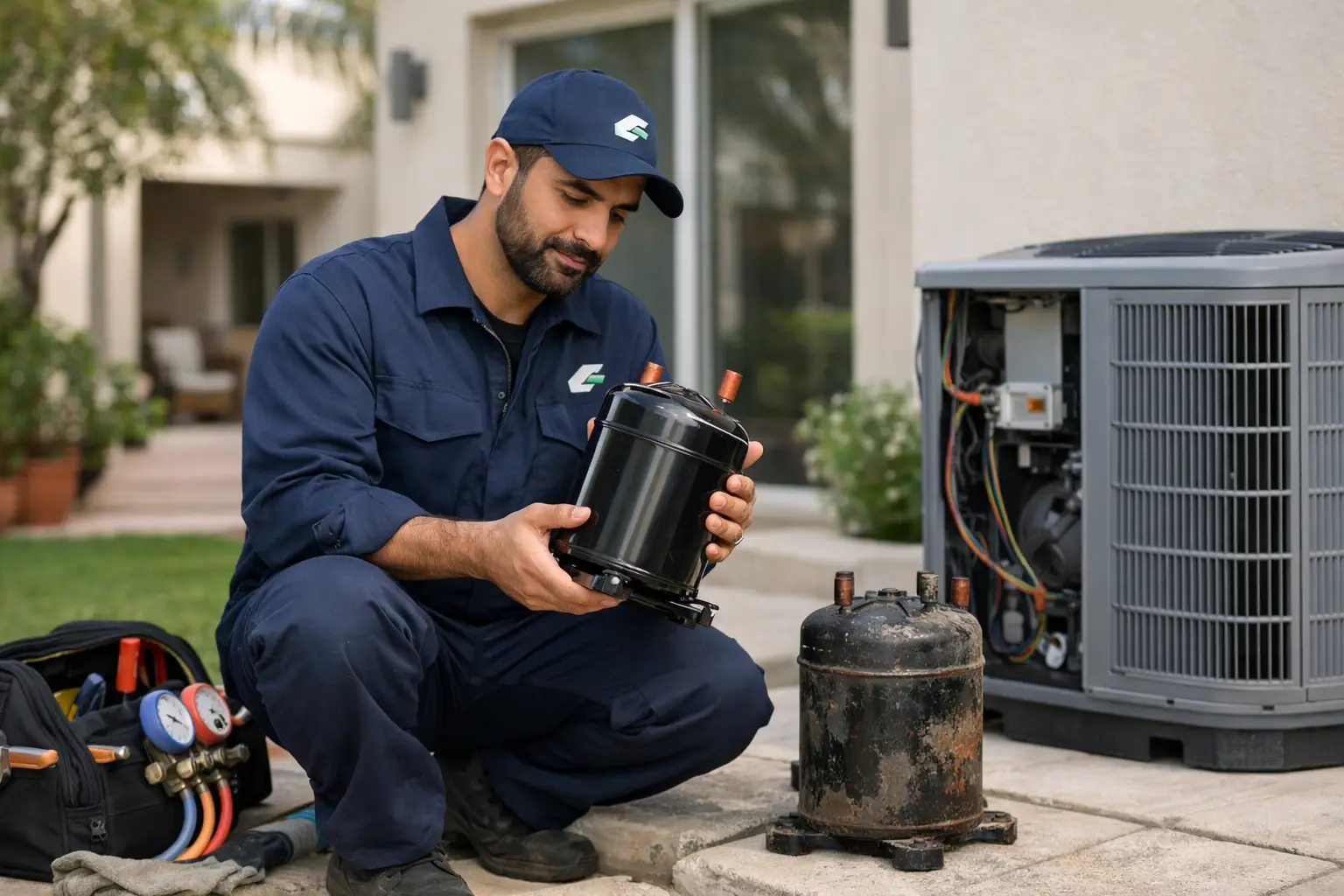
A compressor failure can turn a comfortable home, office, or shop into an urgent problem very quickly. When deciding whether to repair or replace compressor parts in an AC system, the right answer depends on the actual fault, the condition of the full unit, and whether a repair will provide dependable cooling after the technician leaves.
The compressor is often called the heart of an air conditioner because it circulates refrigerant through the system. But weak cooling does not automatically mean the compressor has failed. Electrical faults, a failed capacitor, low refrigerant, dirty coils, a damaged fan, or a control issue can create similar symptoms. A proper on-site diagnosis protects you from replacing a major component when a smaller repair may restore the system.
Start With a Professional Compressor Diagnosis
A qualified technician should inspect more than the compressor itself. They will check whether the outdoor unit is receiving the correct power, test starting components, inspect wiring and contactors, measure operating pressures, and look for refrigerant leaks or restrictions in the cooling system.
This matters because a compressor may stop starting due to a worn capacitor or electrical connection. In other cases, it may run but overheat because the condenser coil is blocked with dust, airflow is poor, or refrigerant levels are not correct. These are repairable causes that should be addressed before considering compressor replacement.
A technician should also confirm the system’s cooling performance after the work is complete. The goal is not simply to make the outdoor unit turn on. It is to restore stable, effective cooling throughout the property.
Signs the Compressor May Be the Problem
Some warning signs point more strongly toward compressor trouble, especially when they appear together. The AC may blow warm air while the thermostat is set correctly, the outdoor unit may make loud clicking or humming sounds without starting, or the breaker may trip when the system attempts to run.
A compressor that is overheating may shut down repeatedly and leave the indoor unit running without delivering enough cool air. You may also notice an unusual burning smell, vibration from the outdoor unit, or a sharp rise in run time as the AC struggles to reach the set temperature.
These symptoms need prompt attention in Kuwait’s heat. Continuing to force an AC system to run can place more stress on electrical components and may lead to a larger interruption in cooling. Turn the unit off if you smell burning, see smoke, or experience repeated breaker trips, then arrange professional service rather than resetting the breaker again and again.
When Compressor Repair Makes Sense
Repair is often the practical choice when the compressor itself is still mechanically sound and the fault is connected to a supporting part. Replacing a failed capacitor, contactor, relay, wiring connection, or overload protector can allow the compressor to start and operate normally again.
Electrical repairs are particularly common in systems that experience heavy seasonal use. Heat, dust, vibration, and extended operating hours can affect components in the outdoor unit. Correcting the underlying electrical issue can be far more sensible than replacing the compressor.
Repair may also be appropriate when the compressor is protected by a manufacturer warranty and the rest of the AC system is in good condition. The technician should still identify why the issue occurred. For example, if a dirty condenser coil contributed to overheating, cleaning and maintenance need to be part of the repair. Otherwise, the replacement or repaired component may face the same strain.
A repair is most worthwhile when it gives the unit a reliable working life ahead, not merely a short-term restart. Clear communication matters here. You should know what failed, what was tested, and what condition the technician found in the rest of the cooling system.
When to Replace the Compressor
Compressor replacement becomes more likely when testing confirms an internal mechanical or electrical failure. A grounded compressor, damaged internal windings, seized components, or severe loss of compression usually cannot be corrected with an external part replacement.
Replacement may also make sense when the AC unit is otherwise well maintained, appropriately sized for the space, and has several useful years remaining. In that situation, installing a compatible compressor and addressing the cause of failure can restore dependable service without replacing the whole system.
However, the compressor cannot be considered in isolation. If the system has a major refrigerant leak, contaminated lines, repeated electrical problems, damaged coils, or a history of frequent breakdowns, replacing only the compressor may not be the best long-term solution. The technician needs to inspect the full system so the new component is not installed into conditions that could damage it.
Repair or Replace Compressor: Consider the Whole AC Unit
The repair-or-replacement decision should be based on the complete condition of your equipment. A newer split AC with a single confirmed fault is different from an older central AC system that has needed repeated repairs over several seasons.
Consider the unit’s age, maintenance history, cooling performance before the failure, availability of suitable parts, and the condition of the indoor and outdoor sections. If your AC has cooled evenly, operated efficiently, and required few repairs until now, compressor replacement may be a reasonable path. If it has been noisy, inefficient, leaking, and unreliable for some time, a broader recommendation may better protect your comfort and property.
For businesses, downtime is another important factor. An office, retail space, restaurant area, or occupied rental property may need fast action to keep customers, staff, or tenants comfortable. A skilled technician can explain the available repair path after inspection and help you make a decision based on reliable operation, not guesswork.
Why Refrigerant Leaks and Cleanliness Matter
A compressor does not usually fail without a reason. Refrigerant leaks can cause incorrect pressure levels and force the compressor to work harder. Simply adding refrigerant without locating and repairing the leak can leave the system vulnerable to the same problem.
Dirty condenser coils can create similar stress. When heat cannot leave the outdoor unit efficiently, the compressor operates at higher temperatures. In Salmiya and across Kuwait, outdoor units are exposed to heat and dust for much of the year, making regular cleaning and maintenance especially valuable.
Before a compressor is replaced, a proper service process should include checking the refrigerant circuit, identifying leaks where present, inspecting airflow, and ensuring electrical readings are stable. If the old compressor failed internally, the system may also require careful cleaning to prevent contamination from affecting the replacement part.
What You Can Do Before the Technician Arrives
You do not need to troubleshoot the compressor yourself, but a few safe observations can help speed up diagnosis. Note whether the indoor unit is running, whether the outdoor unit starts, how long the problem has been happening, and whether the breaker has tripped. Also mention any sounds, burning odors, water leaks, or recent changes in cooling performance.
Keep the outdoor unit accessible and avoid covering it while it is operating. If the AC is making harsh noises or repeatedly tripping the breaker, switch it off. Do not attempt to bypass electrical components, add refrigerant, or open the sealed cooling system. Those tasks require proper tools, testing equipment, and trained handling.
Protect the Replacement With Ongoing Maintenance
Whether the solution is a repair or a new compressor, maintenance helps protect the system afterward. Filters should be cleaned or replaced regularly, indoor and outdoor coils should be kept free of heavy dirt buildup, and drainage should be checked so the AC can run efficiently.
Periodic inspections can catch weak capacitors, loose electrical connections, low refrigerant symptoms, and airflow problems before they turn into a no-cooling emergency. This is especially useful for landlords, businesses, and families managing several rooms or properties with multiple AC units.
Najam Failka Co. provides professional AC diagnostics, compressor service, electrical checks, refrigerant work, and dependable support for homes and businesses. The best next step is a careful inspection that identifies the real fault and leaves you with cooling you can rely on when you need it most.

Leave a Reply