

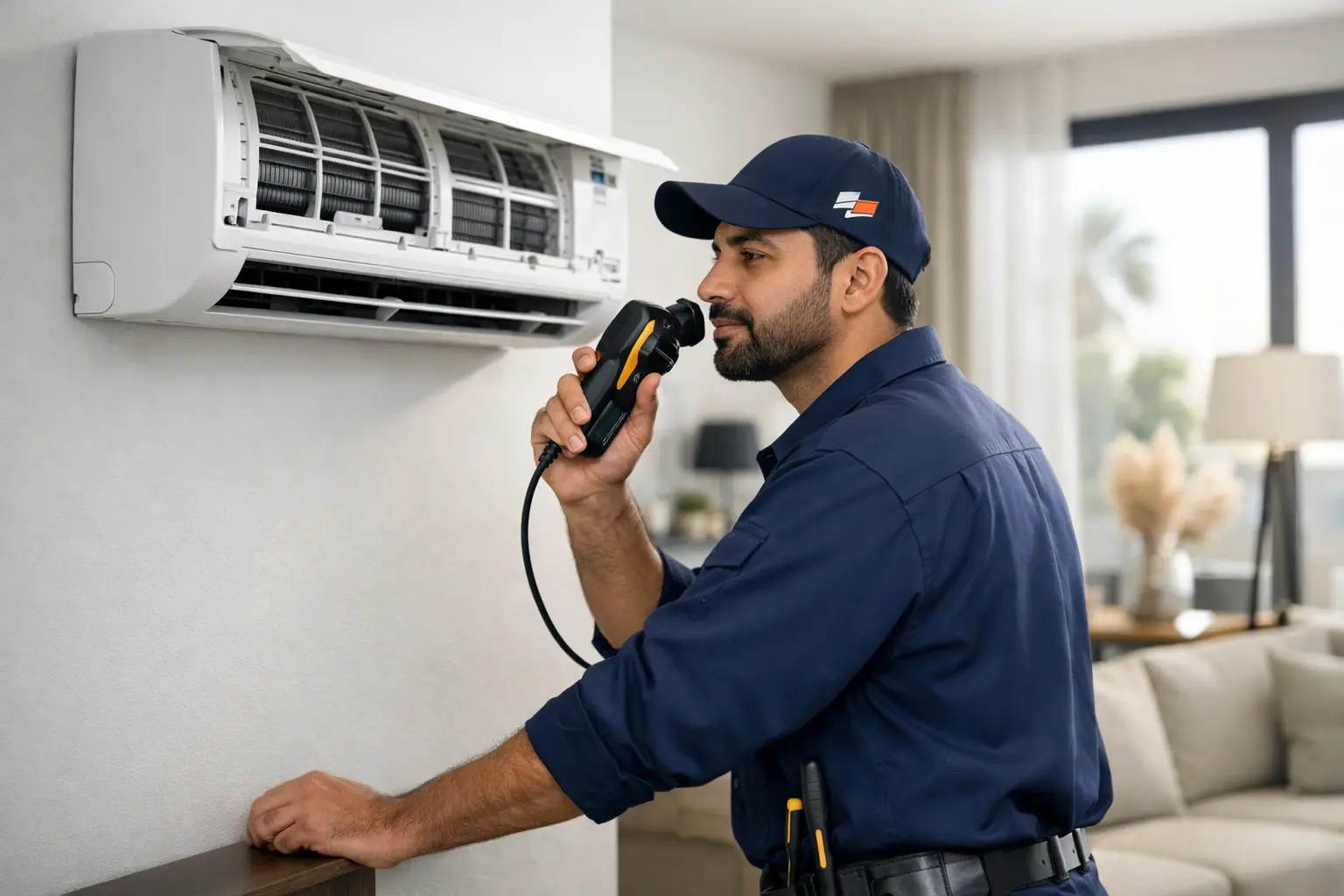
A quiet air conditioner suddenly starts clicking at night, rattling during the day, or making a sharp buzzing sound when it starts. In Kuwait’s heat, AC noise diagnosis is not just about stopping an annoying sound. It is often the first warning that a part is loose, airflow is restricted, or a major component needs attention before cooling is lost.
A sound alone does not always identify one exact fault. The same rattle can come from a loose cover, an outdoor fan issue, or vibration in refrigerant piping. What matters is when the sound occurs, where it comes from, and whether it is paired with weak cooling, water leakage, unusual smells, or repeated shutdowns. A qualified technician checks the full system rather than replacing parts based on noise alone.
Why New AC Noises Should Not Be Ignored
Air conditioners make some normal operating sounds. You may hear a soft hum from the indoor unit, air movement through vents, or a brief click as the thermostat starts or stops the system. These sounds should be steady and familiar.
A new, louder, or irregular noise deserves attention. A small loose screw may be simple to correct, but continuing to run the unit can cause further vibration and damage. A grinding sound, for example, can point to a failing motor bearing. If the motor is allowed to run in that condition, it may overheat and stop completely.
For homes, apartments, offices, and retail spaces, acting early helps protect comfort and avoid an unexpected shutdown during peak heat. It also gives the technician a better chance to find the fault before it affects the compressor, fan motor, electrical controls, or cooling performance.
AC Noise Diagnosis by Sound Type
Rattling or vibrating
Rattling is common in split AC units and central systems. It may come from a loose front panel, filter cover, mounting bracket, outdoor unit casing, or a screw that has worked free over time. Dust buildup and a poorly seated filter can also create vibration as air passes through the indoor unit.
Sometimes the source is more serious. A fan blade that is unbalanced, bent, or touching another component can rattle as it turns. Refrigerant lines can also vibrate against a wall, metal frame, or nearby pipe. The sound may become louder when the fan changes speed or when the compressor starts.
Do not press hard on panels or attempt to straighten fan blades while the system is operating. Turn the unit off if the vibration is severe, then arrange an inspection. The technician can secure covers, check mounting points, inspect the fan assembly, and confirm that piping is properly supported.
Buzzing or humming
A low, steady hum can be normal. A loud electrical buzz is different. It can be linked to a weak capacitor, loose wiring connection, failing contactor, transformer issue, or a compressor that is struggling to start. Buzzing may also occur when debris is close to the outdoor fan.
If the AC buzzes but does not cool, trips a breaker, smells hot, or repeatedly tries to start, switch it off. Electrical faults should not be treated as a trial-and-error repair. The system needs safe testing of its power supply, controls, capacitor condition, and motor or compressor operation.
This is especially important for older units and heavily used systems. Heat, dust, and long operating hours can place extra strain on electrical components. A proper check identifies whether the issue is localized or part of a wider cooling-system fault.
Clicking or tapping
One click when an AC starts or stops is often normal. Repeated clicking, fast clicking, or clicking followed by no cooling is not. In many cases, the unit is attempting to engage a relay or contactor but cannot complete the startup cycle.
A thermostat signal issue, faulty control board, worn relay, capacitor problem, or compressor-related fault can all produce repeated clicks. On a split unit, the noise may come from the indoor control section while the outdoor unit fails to run. On central AC, it may be heard near the thermostat, air handler, or outdoor condenser.
The timing matters. Tell the technician whether clicking happens only at startup, after a few minutes of operation, or continuously. That detail can significantly speed up diagnosis.
Grinding, scraping, or squealing
Grinding, scraping, and squealing are warning sounds that should be handled promptly. They often involve moving parts such as fan motors, blower wheels, bearings, or belts in systems that use them. A scraping sound can occur when a fan blade is rubbing against the housing. Squealing may indicate a worn belt or bearing, depending on the unit design.
Running an AC with a grinding sound can turn a repairable component issue into a larger failure. Shut the system down if the noise is loud, metallic, or accompanied by burning odor, reduced airflow, or intermittent operation. Avoid restarting it repeatedly in the hope that the sound will clear on its own.
Hissing or bubbling
A soft, brief hiss can occur as refrigerant pressure equalizes after the unit stops. Persistent hissing, however, can suggest a refrigerant leak or pressure issue. Bubbling or gurgling may also point to a refrigerant concern, although water drainage and airflow problems can create similar sounds in some cases.
Because refrigerant work requires specialized equipment and correct procedures, this is not a homeowner repair. A technician should inspect the system for leaks, check operating pressures, assess the condition of coils and connections, and confirm whether AC gas filling is actually needed. Adding refrigerant without finding the cause of a leak only delays the real repair.
What to Check Safely Before Calling for Service
You do not need to take apart the unit to provide useful information. Start by noticing whether the sound comes from the indoor unit, outdoor unit, vents, or electrical panel area. Check whether the air is still cool and whether airflow feels weaker than usual.
You can also look for a dirty filter, loose visible cover, water around the indoor unit, ice on accessible piping, or debris around the outdoor condenser. Keep the outdoor area clear of leaves, plastic, and objects that could touch the fan. Do not remove electrical covers, touch wiring, or open the sealed cooling system.
If possible, record a short video of the sound from a safe distance. Note when it began and whether it occurs in cooling mode only. These details help a technician arrive prepared and focus the inspection quickly.
What a Professional Inspection Should Include
Effective AC noise diagnosis is a process, not a guess. The technician should listen to the unit through its startup and operating cycle, inspect mounting hardware and fan assemblies, check filters and airflow, and examine visible signs of wear or leakage.
Depending on the sound, the inspection may also include testing electrical components, checking capacitor performance, verifying fan and compressor operation, assessing refrigerant pressures, and inspecting drainage. For central AC systems, ductwork, blower components, and thermostat controls may also need attention.
The right repair depends on the cause. Tightening a loose panel is very different from replacing a worn motor component or correcting an electrical fault. Clear communication matters: you should understand what is making the noise, what repair is recommended, and how the technician confirmed that the unit is operating correctly afterward.
When the Noise Is an Emergency
Turn the AC off and request prompt professional support if you hear loud grinding, repeated electrical buzzing, sharp popping, or a metallic banging sound. The same applies if the noise comes with burning smell, smoke, a tripped breaker, water near electrical parts, or complete loss of cooling.
For urgent cooling problems in Salmiya and nearby areas, Najam Failka Co. can provide professional on-site support for split and central AC systems. Fast attention is particularly valuable when a noisy unit is serving children, elderly family members, occupied apartments, offices, or customer-facing businesses.
The best time to investigate an unusual AC sound is while the unit is still cooling and the symptom is clear. A careful inspection now can protect the system, reduce disruption, and help keep your space comfortable when you need cooling most.

Leave a Reply