

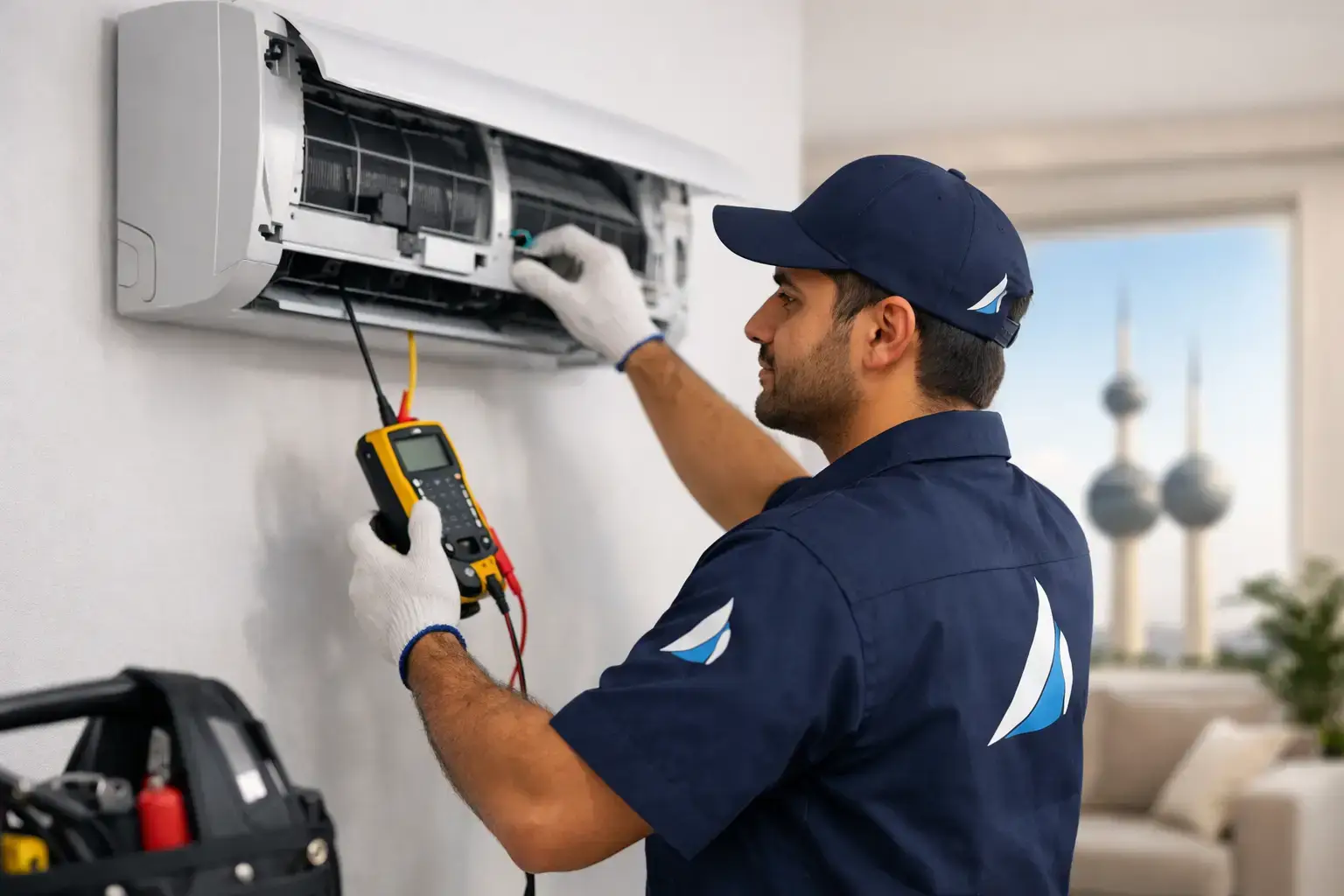
A weak AC in the middle of a Kuwait afternoon is not a small inconvenience. It can quickly affect sleep, family comfort, customers, staff, and equipment inside your property. This best AC maintenance checklist helps homeowners, tenants, landlords, and business operators spot simple issues early and know when a skilled technician should take over.
AC maintenance is not about taking apart the system yourself. It is about keeping airflow clear, watching for changes in performance, and arranging professional service before a small fault becomes a complete cooling failure. That approach can help central and split AC systems work more reliably through long periods of heavy use.
Best AC Maintenance Checklist: Start With What You Can See
A quick visual check takes only a few minutes and can reveal problems that deserve attention. Begin with the indoor unit, outdoor unit, thermostat, and the rooms the AC serves.
Look for water stains, dripping, unusual frost, damaged insulation around visible refrigerant lines, or signs that the unit is struggling to start. A small amount of water at a drain outlet may be normal, but water leaking inside a room, from a ceiling vent, or around a wall-mounted split unit is not something to ignore.
Pay attention to the air coming from vents or the split AC indoor unit. It should feel consistently cool after the system has been running for a reasonable time. If one room is much warmer than the others, the cause may be restricted airflow, a thermostat setting, duct trouble, or a system fault that needs diagnosis.
Also listen carefully. Rattling panels may be simple to secure, but grinding, sharp buzzing, loud clicking, or repeated starting and stopping can point to a mechanical or electrical issue. Turn the AC off and arrange professional support if a sound is severe, new, or accompanied by a burning smell.
Check and Replace Air Filters Regularly
A dirty air filter is one of the most common reasons an AC feels weak. Dust builds up quickly in occupied homes, apartments, offices, and shops, especially when doors open often or renovation work is happening nearby. When the filter is clogged, the system has to work harder to pull air through it.
Check filters monthly during periods of frequent AC use. Some washable filters can be cleaned carefully according to the unit instructions, allowed to dry completely, and reinstalled. Disposable filters should be replaced with the correct size and type. Never run the system without a properly fitted filter, even for a short period.
Clean filters support better airflow, but they cannot solve every cooling problem. If a clean filter does not improve weak cooling, the issue may involve the evaporator coil, blower, ductwork, refrigerant level, compressor, or another component that requires an experienced technician.
Keep the Outdoor Unit Clear and Able to Breathe
The outdoor condenser releases heat from your property. If it is blocked by dust, leaves, stored items, or tightly packed materials, the AC cannot reject heat efficiently. In Kuwait’s extreme temperatures, that extra strain can lead to higher running time and a greater risk of failure.
Keep a clear space around the outdoor unit. Do not stack boxes, cover the unit while it is operating, or allow plants and debris to press against its sides. Check that the top grille is clear and that nothing has fallen into the fan area.
Avoid spraying the unit with high-pressure water or trying to straighten coil fins with improvised tools. Condenser coils and fins can be damaged easily. A professional maintenance visit can include safe cleaning of the outdoor section, electrical checks, and inspection of the fan and compressor area.
Test the Thermostat and Cooling Settings
Before assuming the AC is faulty, confirm that the thermostat or remote control is set to cooling mode and at an appropriate temperature. Check whether batteries in the remote need replacing and whether the thermostat display is working normally.
Set the temperature a few degrees below the current room temperature, then give the system time to respond. Repeatedly changing the setting from very low to very high will not cool a room faster. It can make it harder to judge whether the system is actually responding correctly.
For central AC, make sure supply vents are open and unobstructed by furniture, curtains, or shelving. Closing too many vents can affect airflow balance and place unnecessary pressure on the system. If specific rooms remain hot despite correct settings and open vents, a technician can inspect airflow and system performance properly.
Watch the Drain Line for Early Warning Signs
Air conditioners remove humidity as they cool. That moisture must drain away safely. A blocked or dirty drain line can cause water leaks, unpleasant odors, ceiling damage, and automatic shutdowns on some systems.
Warning signs include water dripping from the indoor unit, a musty smell when the AC starts, damp areas near vents, or moisture around the drain pan. Do not keep running an AC that is actively leaking indoors. Switch it off if safe to do so, protect nearby furniture or electrical items, and request service.
Drain problems are often straightforward when handled early. Left untreated, however, they can affect walls, ceilings, flooring, and indoor comfort. Professional cleaning helps clear the blockage while checking whether the drain pan, pump, pipe connection, or coil is contributing to the issue.
Run a Monthly Performance Check
Your AC does not need to fail completely before it receives attention. Once a month, run a brief performance check and compare how the system feels with normal operation. This is particularly useful for rental properties, offices, and businesses where several units may be operating at once.
During the check, look for these four changes:
- Cooling that takes much longer than usual to reach the set temperature
- Airflow that feels weaker at vents or from the indoor split unit
- New odors, noises, leaks, or repeated breaker trips
- Electricity use that appears unusually high without a clear reason
One symptom does not always mean a major repair is needed. A dirty filter, for example, can reduce airflow. But several symptoms together often indicate a problem that should be diagnosed before the hottest days place even more demand on the system.
Schedule Professional AC Maintenance Before Peak Heat
Routine professional maintenance is the part of the checklist that protects components you cannot safely inspect yourself. A trained technician can examine electrical connections, capacitors, contactors, coils, blower performance, refrigerant-related concerns, drain function, compressor operation, and overall cooling output.
The right schedule depends on the system and how heavily it is used. A lightly used residential unit may need less attention than an AC serving a busy office, retail space, restaurant area, or large family home. Systems exposed to dust, frequent operation, or past repair issues generally benefit from more regular checks.
Professional service is also valuable before the peak summer period, when a hidden weakness can become a sudden breakdown. For properties in Salmiya and surrounding Kuwait areas, arranging maintenance before the hottest stretch gives you more time to address faults without waiting for an urgent cooling failure.
Know When Maintenance Becomes an Urgent Repair
Some AC problems should not wait for the next planned service visit. Request prompt support if the unit blows warm air, trips the breaker repeatedly, leaks heavily indoors, gives off a burning odor, will not turn on, or makes loud mechanical sounds.
Do not attempt electrical repairs, compressor work, or AC gas handling yourself. These jobs require proper tools, safe procedures, and accurate diagnosis. Adding refrigerant without finding the reason for low cooling can leave the real issue unresolved and may cause further system damage.
Najam Failka Co. provides professional support for split and central AC concerns, from cooling diagnostics and maintenance to compressor service and urgent repairs. A clear on-site assessment helps identify what is happening and confirms that the unit is cooling properly before the work is complete.
A well-maintained AC should fade into the background of your day: steady airflow, comfortable rooms, and no surprise leaks or alarming sounds. Keep this checklist close, act when performance changes, and give your system attention before the heat makes every small issue feel urgent.

Leave a Reply