

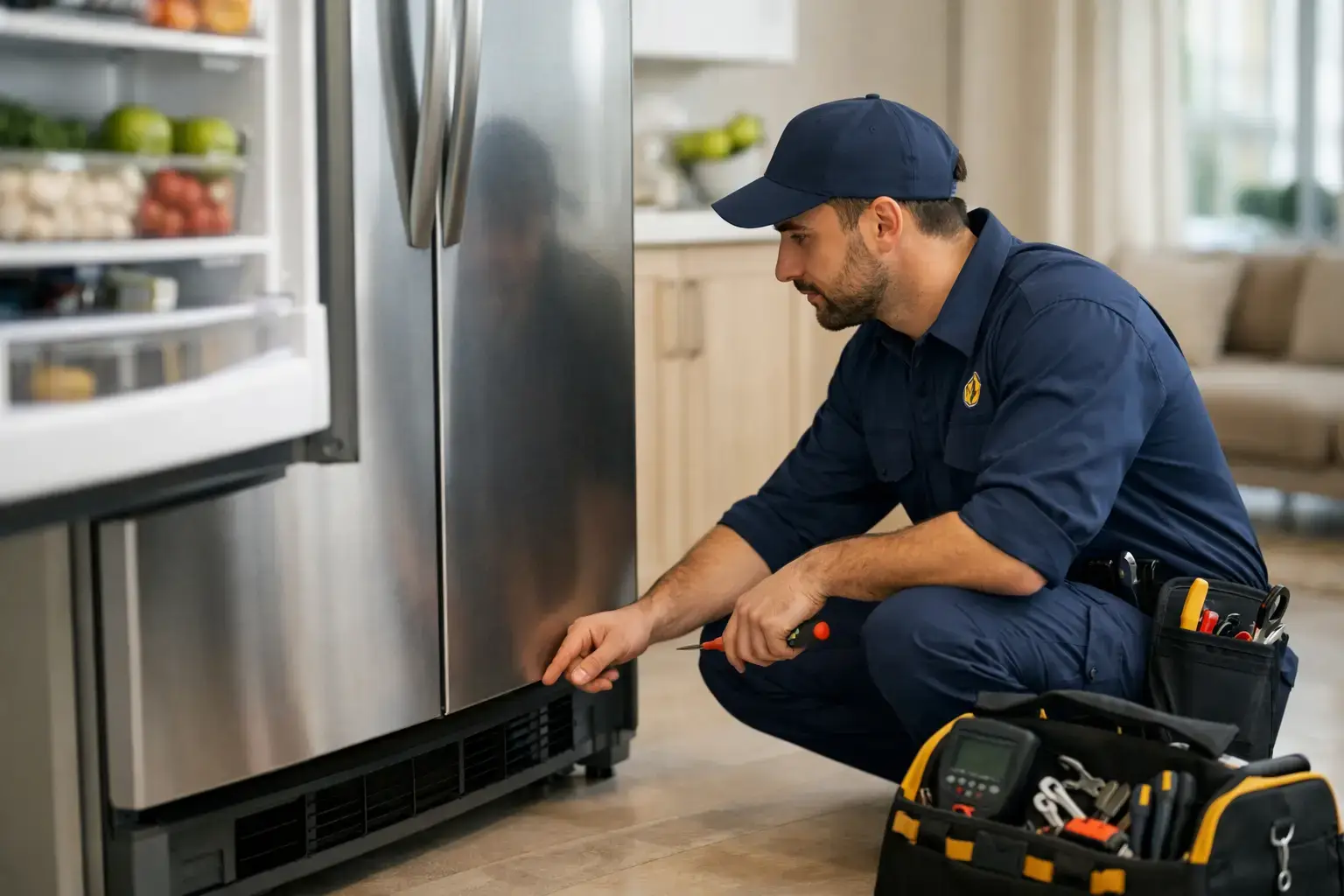
A refrigerator that stops cooling is not a minor inconvenience when groceries, medicine, or business stock are inside. Refrigerator repair should begin with a quick check of the symptoms, but it should not become a risky DIY project involving electrical parts, refrigerant, or a failing compressor. Fast, professional diagnosis helps protect your food, reduce disruption, and prevent a smaller fault from becoming a complete breakdown.
Start With the Signs You Can See
Most refrigerator problems give a warning before the unit stops working completely. You may notice food staying warmer than usual, water collecting under the appliance, ice building up in the freezer, or a motor sound that seems louder than normal. Sometimes the refrigerator runs constantly but does not reach a safe temperature. In other cases, the interior light works but the cooling has stopped.
These symptoms can come from several different faults. A damaged door seal can let cold air escape. Blocked airflow may keep cold air from reaching the refrigerator compartment. A faulty fan, thermostat, defrost component, start relay, or compressor can also cause poor cooling. The visible symptom matters, but the correct repair depends on finding the actual cause.
For homes in Kuwait, ambient heat can make an already weak refrigerator work much harder. A unit placed close to a hot wall, in a poorly ventilated kitchen area, or beside a heat-producing appliance may struggle more during the hottest months. That does not always mean the refrigerator itself has failed, but it is a useful detail to share with the technician.
Safe Checks Before You Request Refrigerator Repair
A few simple checks can save time and help describe the issue clearly. Confirm that the refrigerator is firmly connected to a working outlet and that the circuit breaker has not tripped. Check the temperature controls in case they were accidentally changed. Then make sure the doors are closing fully and that food containers are not blocking them.
Look at the door gasket for tears, hard areas, or gaps. A loose or damaged seal allows warm air inside, which can create condensation, frost, and weak cooling. Also check whether the appliance has enough space around it for ventilation. Dust on accessible exterior vents can contribute to poor performance, although cleaning should be done carefully and only with the appliance unplugged.
Do not use sharp objects to remove freezer ice. Do not open electrical panels, cut wires, or attempt to add refrigerant. Those jobs require proper tools, training, and safety checks. Refrigerant work is especially not a trial-and-error task: the system must be diagnosed for leaks and operating faults before any corrective service is performed.
If food is warming quickly, transfer it to another working refrigerator or insulated cooler if available. Limit how often you open the faulty unit, because every open door brings in more warm air.
Common Refrigerator Problems and What They May Mean
The refrigerator is running but not cooling
When you can hear the refrigerator running but the inside remains warm, airflow and cooling-system components need attention. The evaporator fan may not be circulating cold air, condenser coils may be restricted, or a control part may not be operating correctly. A compressor or refrigerant-system issue is also possible.
This is a situation where guessing can be expensive in lost food and unnecessary parts. A technician should test the unit, inspect the fan operation, check relevant electrical components, and determine whether the cooling system is functioning as it should.
The freezer is cold but the refrigerator section is warm
This often points to an airflow or defrost issue rather than a total loss of cooling. Frost can build behind freezer panels and block the passages that supply cold air to the refrigerator section. A failed fan, damaged air damper, or faulty defrost heater, sensor, or control can create the same problem.
The refrigerator may appear to improve after the ice melts, but the fault can return if the defrost system is not repaired. A proper inspection identifies the failed component instead of treating the symptom temporarily.
Water is leaking onto the floor
A puddle near the refrigerator can result from a blocked or frozen defrost drain, a damaged water line on applicable models, or a problem with the drain pan. Water leaks should be addressed promptly. Beyond damaging flooring or cabinets, they can create a slip hazard and may reach electrical connections.
Dry the area around the unit and avoid moving it aggressively, especially if a line or connection may be damaged. A technician can trace the source of the water and check that the drain system is clear and secure.
The refrigerator is noisy, clicking, or cycling repeatedly
Some refrigerator noise is normal. Fans, compressors, and ice makers all make operating sounds. What deserves attention is a sudden change: repeated clicking, loud buzzing, grinding, rattling, or a compressor that starts and stops every few minutes.
A clicking sound can be related to a start component, electrical supply issue, or compressor problem. Grinding may indicate a fan obstruction or worn motor. Rattling can sometimes be as simple as an unstable appliance, but it can also come from a loose part. The difference is best confirmed through an on-site inspection.
Frost keeps returning in the freezer
A small amount of frost can occur if the door is left open, but heavy or repeated buildup usually signals a problem. The door gasket may be leaking, the door may not be aligned, or the automatic defrost system may not be completing its cycle.
Excess frost reduces usable freezer space and restricts airflow. It also makes the refrigerator work longer, which can increase wear on important components. Repairing the cause helps restore normal performance instead of requiring repeated manual defrosting.
When a Repair Is More Practical Than Replacement
The right choice depends on the refrigerator’s age, condition, and the component that has failed. A newer unit with a door-seal problem, fan fault, drain blockage, thermostat issue, or defrost component failure is often a strong candidate for repair. These issues can usually be addressed without replacing the entire appliance.
The decision is less straightforward when an older refrigerator has a major compressor or sealed-system problem, repeated breakdowns, serious rust, or damaged cabinet insulation. A technician can explain the condition of the appliance and the repair required after inspection, allowing you to make a practical decision based on its overall reliability.
For landlords and business operators, downtime is also part of the decision. A refrigerator in a staff pantry, small shop, office kitchen, or rental property may need prompt attention even if the fault seems minor. Restoring dependable operation quickly helps avoid complaints, product loss, and disruption to daily work.
What Professional Refrigerator Repair Should Include
A reliable service visit is more than replacing the first part that looks suspicious. The technician should listen to the symptoms, inspect the unit’s cooling performance, check electrical connections and key components, and explain the findings in clear language. After the repair, the refrigerator should be tested to confirm that it starts, cools, and cycles properly.
This careful approach matters because refrigerator faults can overlap. For example, a warm compartment may be caused by airflow restriction, a faulty sensor, a fan problem, or a cooling-system fault. Replacing parts without diagnosis can waste time and leave the main issue unresolved.
Najam Failka Co. provides on-site appliance support for homes and businesses that need dependable refrigerator repair in Salmiya and surrounding areas. Professional technicians can assess the fault, carry out the needed repair, and confirm that the unit is operating correctly before service is complete.
Help Your Refrigerator Work Better After Repair
Once the refrigerator is working again, a few habits can reduce strain. Keep the door seals clean, avoid overpacking vents inside the compartments, and allow hot food to cool before placing it inside. Do not push the appliance tightly against the wall if it needs rear or side ventilation.
Clean accessible dust from around the exterior ventilation area periodically, following the appliance manufacturer’s guidance. If the refrigerator begins running longer than usual, develops new frost, leaks water, or loses cooling again, arrange service early rather than waiting for a full failure.
A working refrigerator protects more than groceries. It keeps the household routine moving, supports tenants and customers, and gives you one less urgent problem to manage. When the warning signs appear, prompt professional attention is the practical way to restore reliable cooling.

Leave a Reply