

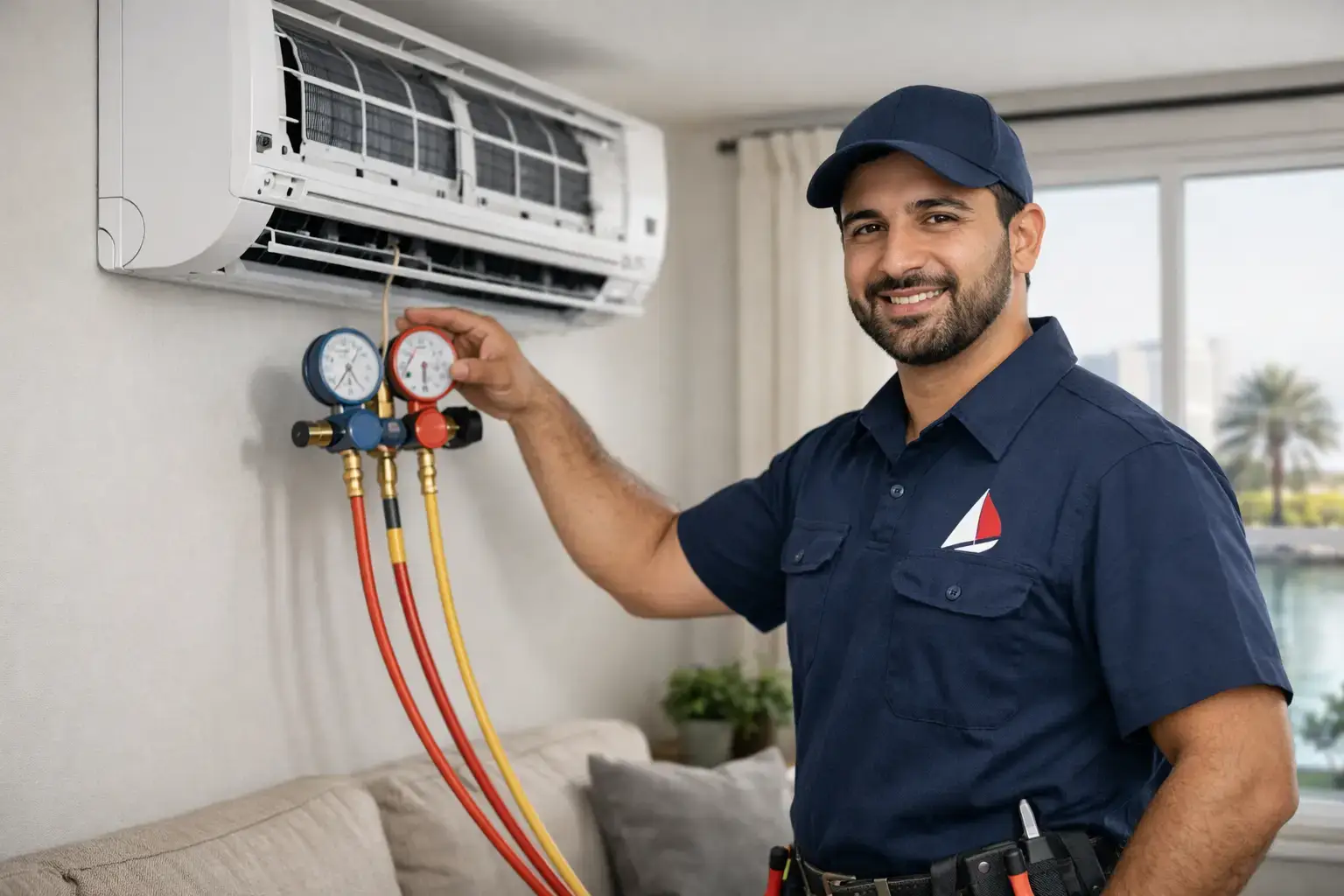
A Kuwait AC unit can go from slightly weak to completely ineffective in a matter of hours. For residents searching تصلیح تکییف وحدات کویت, the priority is simple: restore safe, consistent cooling before the heat affects your family, tenants, customers, or staff. The right repair starts with a clear diagnosis, not a quick guess or a temporary adjustment that leaves the real fault behind.
At Najam Failka Co., our technicians handle split and central AC problems for homes, apartments, offices, and commercial spaces. We focus on identifying what is causing the issue, explaining the required work clearly, and confirming that the system is cooling properly before the visit is complete.
When Your AC Unit Needs Professional Attention
Most air conditioners give warning signs before they stop working. Weak airflow, uneven room temperatures, frequent cycling, water dripping from the indoor unit, unusual sounds, or a sudden rise in electricity use can all point to a developing problem. Ignoring these symptoms may turn a manageable repair into a larger disruption, especially during Kuwait’s hottest months.
An AC that runs but does not cool is one of the most common calls. This can be caused by low refrigerant, a dirty evaporator coil, a blocked filter, a faulty capacitor, compressor trouble, or an electrical control issue. These faults can feel similar from inside the room, which is why an on-site inspection matters. Adding gas without locating a leak, for example, may improve cooling briefly but will not solve the underlying problem.
Water leakage should also be addressed promptly. A blocked drain line, dirty coil, incorrect installation angle, or frozen evaporator can allow water to collect and overflow. Beyond damaging walls, flooring, or furniture, moisture around an AC unit can create avoidable electrical and hygiene concerns.
تصلیح تکییف وحدات کویت for Split and Central Systems
Split AC units and central AC systems require different checks, but both depend on clean airflow, correct refrigerant pressure, reliable electrical components, and properly functioning controls. A professional technician should inspect the complete cooling path rather than focus on only one visible symptom.
For split AC repair, the technician may check the indoor blower, filters, coil condition, drain system, outdoor condenser, fan motor, capacitor, wiring, thermostat settings, and refrigerant circuit. A buzzing outdoor unit, a fan that will not start, or ice forming on pipes can each indicate a different issue. Careful testing helps prevent unnecessary part replacement.
Central AC repair often involves additional components such as ductwork, air handlers, thermostats, zone controls, and larger condensers. If some rooms are cool while others remain warm, the problem may not be the main unit alone. Restricted airflow, duct leakage, damaged dampers, or a thermostat fault can affect comfort across the property.
For businesses, a central AC failure can interrupt normal operations quickly. Offices become difficult to work in, retail customers may leave sooner, and equipment in poorly ventilated spaces can be affected by high temperatures. Fast response is valuable, but accurate diagnosis remains the key to a repair that lasts.
Common AC Problems and What They Usually Mean
A few symptoms can help you describe the problem clearly when requesting service. If the AC blows air but the air is warm, there may be a refrigerant, compressor, capacitor, or outdoor-unit issue. If airflow is weak, dirty filters, blower faults, frozen coils, or duct restrictions may be involved.
A unit that turns on and off repeatedly may be overheating, receiving incorrect thermostat readings, struggling with a dirty condenser, or experiencing an electrical component problem. Loud clicking, rattling, grinding, or humming should not be ignored. Some sounds come from loose panels, but others can signal motor, fan, relay, or compressor trouble.
Bad odors deserve attention as well. A musty smell can result from moisture buildup, dirty filters, or microbial growth around the indoor coil and drain area. A burning smell or repeated breaker trips requires more urgent assessment. Turn the system off and arrange professional support rather than repeatedly resetting the breaker.
Why Fast Repair Does Not Mean Rushed Repair
When the temperature is high, every customer wants their AC back quickly. That is reasonable. Still, a dependable repair process includes inspection, testing, repair, and a final operational check. Skipping any of these steps can leave you with cooling that fails again the next day.
A skilled technician checks whether the unit is drawing normal electrical current, whether the compressor and fans are operating correctly, and whether the temperature difference and airflow are appropriate. If refrigerant service is needed, the system should be checked for signs of leakage and tested after service. If a part is failing, the cause should be explained in practical terms so you know what work is being completed.
The repair decision also depends on the condition and age of the unit. Some problems, such as a clogged drain or worn capacitor, can often be resolved directly. A compressor issue, damaged coil, or repeated refrigerant leak may need more detailed evaluation. Honest advice means looking at system reliability, not merely getting the unit to start once.
Simple Steps Before the Technician Arrives
You do not need to troubleshoot internal AC components yourself. However, a few safe checks can help speed up the visit. Make sure the thermostat is set to cooling and the desired temperature is lower than the room temperature. Check whether the circuit breaker has tripped, and look at the air filter if it is easily accessible and safe to remove.
If the unit is leaking water, place a container or towels beneath the drip area to protect nearby surfaces. If you notice smoke, a burning odor, exposed wiring, or repeated electrical trips, switch the AC off and avoid operating it again until it has been inspected.
It is also helpful to tell the technician when the issue began, whether the system cools at any time of day, and whether you have noticed noises, leaks, ice, or error messages. These details often point the inspection in the right direction from the start.
Preventing Emergency AC Failures
Regular maintenance cannot prevent every breakdown, but it reduces the chance of being surprised by one in peak summer. Clean filters support airflow and help the system operate more efficiently. Indoor and outdoor coils need periodic attention because dust buildup makes heat transfer harder. Drain lines should stay clear, and electrical connections should be checked for wear or overheating.
Maintenance is especially useful before sustained hot weather, when AC systems run for long periods without rest. Landlords can protect tenant comfort by scheduling checks between occupancy changes or before summer demand rises. Business owners can reduce operational risk by having cooling systems inspected before a busy season rather than waiting for a shutdown.
For properties in Salmiya and surrounding Kuwait areas, prompt local support can make a significant difference when cooling stops unexpectedly. Whether the concern is a split unit in a bedroom, central AC in an office, or an ongoing issue with weak cooling, professional service should leave you with clear answers and a system that has been properly tested.
When your AC starts showing signs of trouble, acting early protects comfort, equipment, and peace of mind. A careful repair today can help keep your home or workplace cool when you need it most.

Leave a Reply