

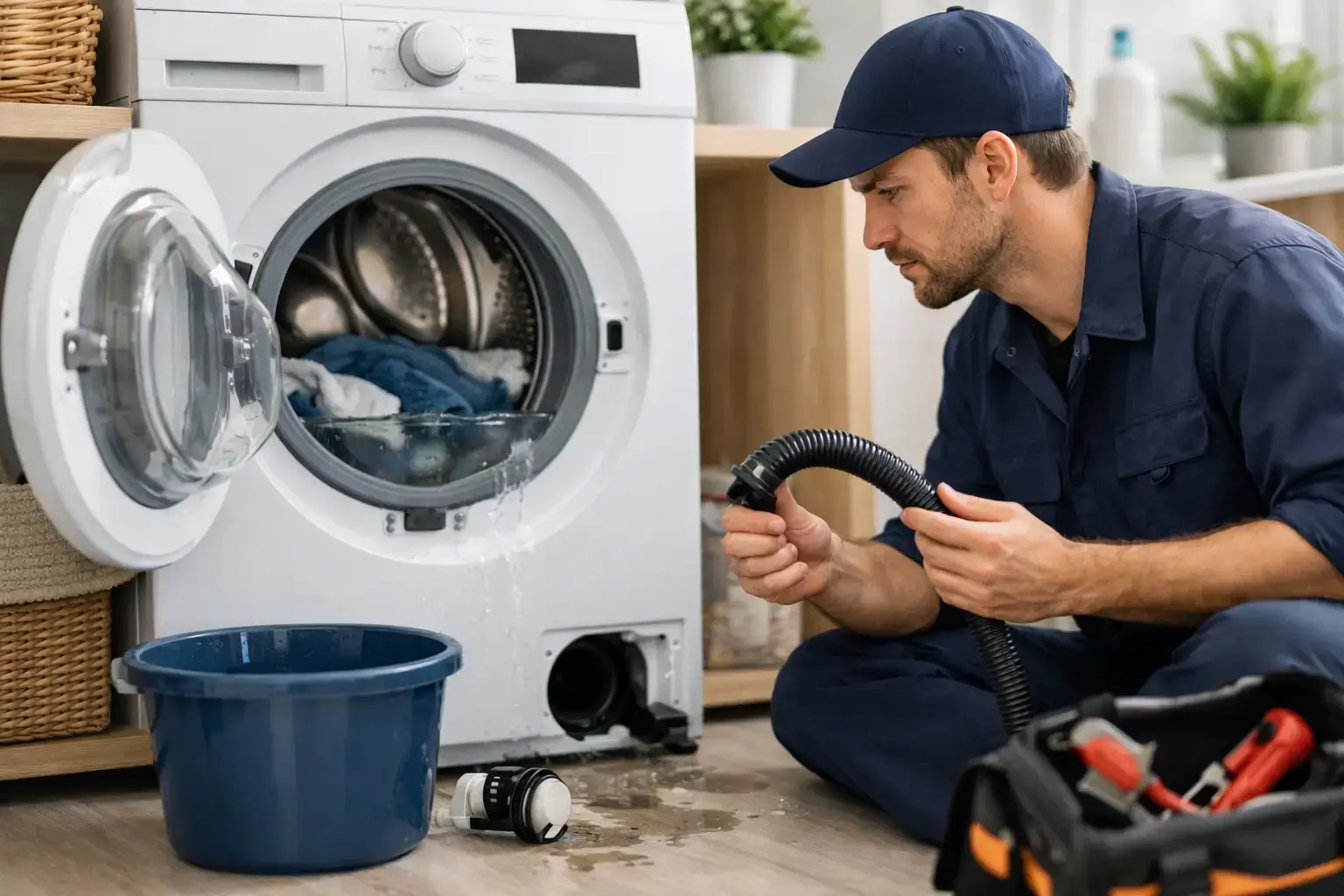
A washing machine not draining turns a normal laundry load into a problem quickly: wet clothes, standing water in the drum, and a cycle that will not finish. Before trying to force the door open or restart the machine repeatedly, stop the cycle and assess the issue safely. In many cases, the cause is a blocked drain path or a simple operating problem. In others, the machine needs a qualified technician to diagnose a failed pump, lock, or control component.
Start With Safe Checks
If water remains in the drum, switch the washing machine off and unplug it before inspecting anything. Do not reach into the machine while it is connected to power, and do not tip a heavy washer without help. Water and electrical appliances are not a good combination for trial-and-error repairs.
First, check whether the machine has simply paused because of an unbalanced load. Large towels, bedding, or a single heavy item can gather on one side of the drum. Some washers stop before spinning to prevent damage or excessive vibration. If the door unlocks after switching the unit off, redistribute the load, remove a few items if the drum is too full, and run a drain-and-spin cycle.
If the washer still does not drain, look at the visible drain hose behind the appliance. A crushed, sharply bent, or trapped hose can stop water from leaving the machine. Straighten the hose gently and make sure it has not been pushed too far down into the drain pipe. The hose should be secure, but it also needs proper airflow around the connection to prevent drainage issues.
Why a Washing Machine Is Not Draining
Drainage faults are usually caused by one of a few components. The symptom may look the same every time, but the correct repair depends on where the water flow stops.
A blocked pump filter or drain trap
Many front-load washing machines have a small service panel near the bottom of the unit. Behind it is often a drain filter designed to catch lint, coins, hairpins, buttons, and other small objects before they reach the pump. When this filter becomes blocked, the washer may drain slowly, make a humming sound, or stop with water inside.
Check the user manual before opening the panel, as the process differs by model. Place towels and a shallow tray in front of the machine because water may spill out. Some units have a small emergency drain tube that lets you empty the water gradually before removing the filter. Never force the filter cap. If it is stuck, damaged, or surrounded by leaking water, arrange professional service.
A clogged or damaged drain hose
The hose can collect lint, fabric fibers, or debris over time. It can also crack, split, or become blocked where it connects to the household drain. A visible kink is easy to correct, but an internal blockage is not always obvious.
If the hose looks sound but water still will not move, avoid using sharp objects or excessive pressure to clear it. This can puncture the hose or dislodge a connection behind the machine. A technician can inspect the full drain route and confirm whether the blockage is inside the appliance or in the property plumbing.
A faulty drain pump
The drain pump pushes wastewater from the washer into the drain hose. If the filter is clear and the washer makes a low hum without removing water, an object may be jammed in the pump impeller. If there is no sound at all during the drain stage, the pump motor, wiring, or electronic control may have failed.
A broken pump is not always visible from the outside. Replacing it requires access to internal parts, correct handling of electrical connections, and testing the machine afterward for leaks and proper drainage. This is usually a repair best left to an appliance technician.
A lid lock or door lock problem
Top-load machines generally need the lid to lock before spinning and draining. Front-load machines also depend on a working door lock. If the appliance cannot confirm that the door is securely closed, it may stop mid-cycle with water still inside.
Check for clothing caught in the door seal, a misaligned lid, or a latch that does not close firmly. Do not slam the door or try to bypass the lock. A damaged lock can create a safety issue and may prevent the washer from completing future cycles.
Too much detergent or the wrong detergent
Excess detergent, especially in high-efficiency washers, can create heavy foam that interferes with draining and spinning. This is common when regular detergent is used in a machine that requires HE detergent. The washer may appear full of water when part of the volume is actually foam.
Use the detergent type and amount recommended for your model. If oversudsing is the likely cause, run a rinse-and-spin cycle without adding more detergent. Repeated overuse can lead to residue buildup in hoses and internal components.
A household drain blockage
Sometimes the washing machine is working correctly, but the plumbing drain cannot accept the water fast enough. You may notice water backing up from a nearby floor drain, laundry sink, or standpipe when the washer tries to empty. This points to a plumbing issue rather than a washer fault.
Stop using the appliance if water is overflowing or backing up into the room. Continuing the cycle can cause property damage. A proper inspection is needed to identify whether the obstruction is in the appliance hose, the local drain connection, or a larger plumbing line.
What You Can Do Before Calling for Repair
A few careful observations can help speed up diagnosis. Note when the problem happens: does the washer fill normally but stop before spinning, drain very slowly, make unusual noises, or display an error code? These details help identify whether the issue is related to the pump, lock, hose, filter, or controls.
You can also check the power supply and make sure the washer is plugged directly into a suitable outlet. If the machine has tripped a breaker, smells burnt, loses power, or shows signs of an electrical fault, do not reset it repeatedly. Leave it disconnected and request professional inspection.
Avoid opening cabinet panels, cutting hoses, or attempting to bypass safety switches. These actions can turn a manageable appliance repair into water damage, electrical damage, or a more costly replacement part. The right approach depends on the washer model and the exact reason it has stopped draining.
When to Arrange Professional Washing Machine Repair
Call for repair when cleaning the accessible filter and correcting a visible hose kink do not solve the problem. Prompt service is also the safer choice when the machine leaks, trips power, makes grinding noises, displays recurring error codes, or leaves water in the drum after every cycle.
For homes, apartments, offices, and rental properties in Salmiya and nearby areas, Najam Failka Co. can inspect washing machine drainage faults on site. A trained technician can check the drain pump, hoses, filter housing, door lock, electrical connections, and drainage performance, then confirm that the machine completes a proper cycle before the work is finished.
Preventing Another Drainage Problem
Small habits reduce the chance of future drainage trouble. Empty pockets before washing, especially when laundering children’s clothes or work uniforms. Coins, tissues, clips, and small plastic items are frequent causes of blocked filters and jammed pumps.
Clean the accessible filter at the interval recommended by your machine manufacturer, and avoid packing the drum too tightly. Wash bulky items in balanced loads, use the correct detergent, and leave the door or lid slightly open after laundry when appropriate for your model. This helps reduce moisture and residue inside the machine.
A washer that drains smoothly protects more than your laundry schedule. It helps prevent leaks, odors, and unnecessary strain on the appliance. If standing water remains after a basic safe check, switching the machine off and arranging a proper inspection is the dependable next step.

Leave a Reply