

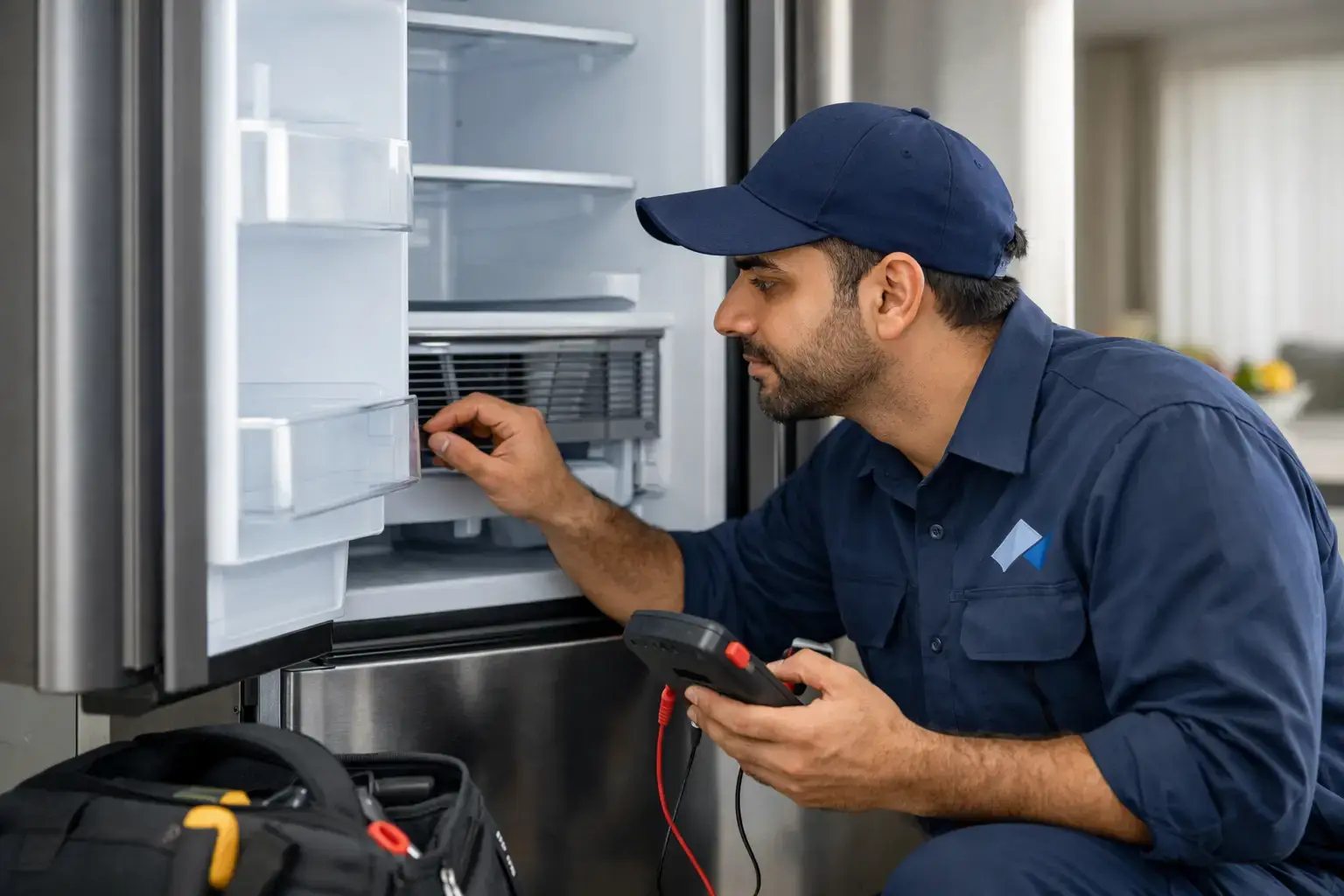
A refrigerator that is running but not keeping food cold can turn into an urgent problem within hours. Refrigerator not cooling repair starts with identifying whether the issue is simple, such as blocked airflow or an incorrect setting, or whether it involves a part that needs professional testing. Acting early protects your groceries, prevents avoidable strain on the appliance, and helps restore normal kitchen routine quickly.
A refrigerator compartment should generally stay at or below 40°F, while the freezer should remain around 0°F. If milk feels warm, food is thawing, or the interior temperature keeps rising, move perishable items to a cooler with ice if possible. Do not rely on a refrigerator that feels only slightly cool to keep food safe.
Start With the Safe Refrigerator Checks
Before assuming a major fault, check the power supply and refrigerator settings. Confirm that the appliance is firmly plugged in, that the outlet has power, and that no circuit breaker has tripped. If the refrigerator light comes on but the unit is not cooling, power may still be reaching only part of the appliance, so the problem should not be dismissed.
Check the temperature control next. A dial can be accidentally turned down during cleaning, moving, or everyday use. Set the refrigerator to a normal mid-range cooling setting, then allow several hours for the temperature to stabilize. Turning the control to its coldest setting is not always the answer. It can cause excess frost in some models and make an underlying airflow issue harder to spot.
Also look at the door seals. A loose, torn, dirty, or hardened gasket allows warm room air to enter continuously. Close the door on a thin sheet of paper and gently pull it. If the paper slides out with little resistance in several places, the seal may not be closing properly. Wipe the gasket and the contact surface with mild soap and water, then check for visible damage.
Why Your Refrigerator May Be Running but Not Cooling
The sound of a running refrigerator does not confirm that it is cooling correctly. The compressor, fans, defrost system, controls, and refrigerant circuit all need to work together. A failure in one part can leave the lights on and the motor humming while the food compartment becomes warm.
Blocked Airflow Inside the Appliance
Cold air must circulate from the freezer section into the refrigerator compartment in many common refrigerator designs. Overpacking shelves, placing large containers directly in front of vents, or covering return-air openings can interrupt that movement. The freezer may remain cold while the fresh-food area becomes warm.
Rearrange food so that vents are clear and air can move around stored items. Avoid pushing packages tightly against the back wall. If airflow is still weak after clearing the shelves, a fan, vent door, or frost buildup may be stopping cold air from reaching the correct area.
Dirty Condenser Coils
Condenser coils release heat from the refrigerator. When they become covered with dust, grease, or pet hair, the appliance must work harder to cool. This can lead to longer running times, reduced cooling performance, and unnecessary energy use.
On many models, coils are located behind the refrigerator or near the bottom. After unplugging the appliance, use a vacuum brush attachment carefully around accessible areas. Do not bend coil lines or force tools into tight spaces. If the unit is still warm after cleaning, the cause may be more than dirty coils.
Frost Buildup in the Freezer
Heavy frost on the rear freezer panel is a common sign of a defrost-related problem. Frost can cover the evaporator coil and block the air passages that cool the refrigerator section. You may notice that the freezer is only partly cold, the refrigerator is warm, or the appliance seems to run almost constantly.
Switching the unit off to let ice melt can temporarily restore airflow, but it does not repair a failed defrost heater, sensor, timer, control board, or door seal. Repeated thawing is inconvenient and can lead to food loss. A technician should diagnose the actual source of the frost before replacing parts.
Fan or Compressor Problems
A refrigerator uses fans to move air across cooling components and through the compartments. A failed evaporator fan can leave the freezer cold near the bottom but stop proper cooling elsewhere. A failed condenser fan can cause excessive heat around the compressor and poor overall performance.
The compressor is another possible cause, especially when the refrigerator clicks repeatedly, runs unusually hot, or stops shortly after starting. Compressor and start-device problems require electrical testing and should be handled by a qualified appliance technician. These parts are not suitable for trial-and-error replacement.
Signs You Need Professional Refrigerator Not Cooling Repair
Some checks are safe for property owners, but sealed cooling systems and electrical components require the right tools and experience. Arrange professional refrigerator not cooling repair when the appliance has no cooling at all, the compressor is making clicking or grinding noises, the freezer is thawing, or there is a burning smell near the rear of the unit.
You should also call for service if water is leaking repeatedly, the circuit breaker trips when the refrigerator starts, or frost returns quickly after a full defrost. These symptoms can point to electrical faults, drainage problems, fan issues, or control failures. Continuing to run the unit may worsen the fault and increase the risk of food spoilage.
A proper inspection should include more than a quick visual check. A skilled technician tests cooling performance, airflow, fan operation, electrical connections, defrost components, compressor starting behavior, and the condition of the door seals. If a refrigerant issue is suspected, it must be diagnosed and repaired correctly rather than simply topped up without finding the source of the problem.
What to Do Before the Technician Arrives
A few details can help speed up diagnosis. Note when the cooling problem began and whether it followed a power outage, moving the appliance, cleaning, or a change in noise. Check whether the freezer is cold, partly cold, or warm, and look for frost on the back freezer wall. If there is a display panel, write down any error code.
Keep the refrigerator connected unless there is an electrical smell, sparking, visible damage to the cord, or a breaker that keeps tripping. If any of those conditions occur, switch off power safely and avoid using the appliance until it has been inspected. Do not puncture ice with sharp objects, tamper with refrigerant lines, or remove electrical covers while the unit is plugged in.
For homes, apartments, offices, and small businesses in Salmiya and nearby Kuwait areas, fast appliance support matters when a refrigerator is protecting daily meals, stock, or customer supplies. Najam Failka Co. provides professional on-site checks focused on clear diagnosis, careful work, and confirming that the appliance is cooling properly before service is complete.
Prevent the Next Cooling Failure
Most refrigerators benefit from basic care. Keep the doors closed firmly, clean spills from gaskets, avoid overloading the compartments, and leave sufficient clearance around the appliance for heat to escape. Cleaning accessible condenser areas periodically is especially useful in dusty environments.
Pay attention to small changes rather than waiting for a complete failure. Longer running cycles, warmer shelves, new rattling sounds, excess frost, and moisture around the door are early warnings worth addressing. A timely inspection can often prevent an inconvenient breakdown at the moment your refrigerator is needed most.
When food safety and household comfort are at stake, the best next step is simple: protect your perishables, avoid risky repairs, and have the cooling fault checked by a qualified technician.

Leave a Reply